What really happens at the compound and why that is where the profit lies.
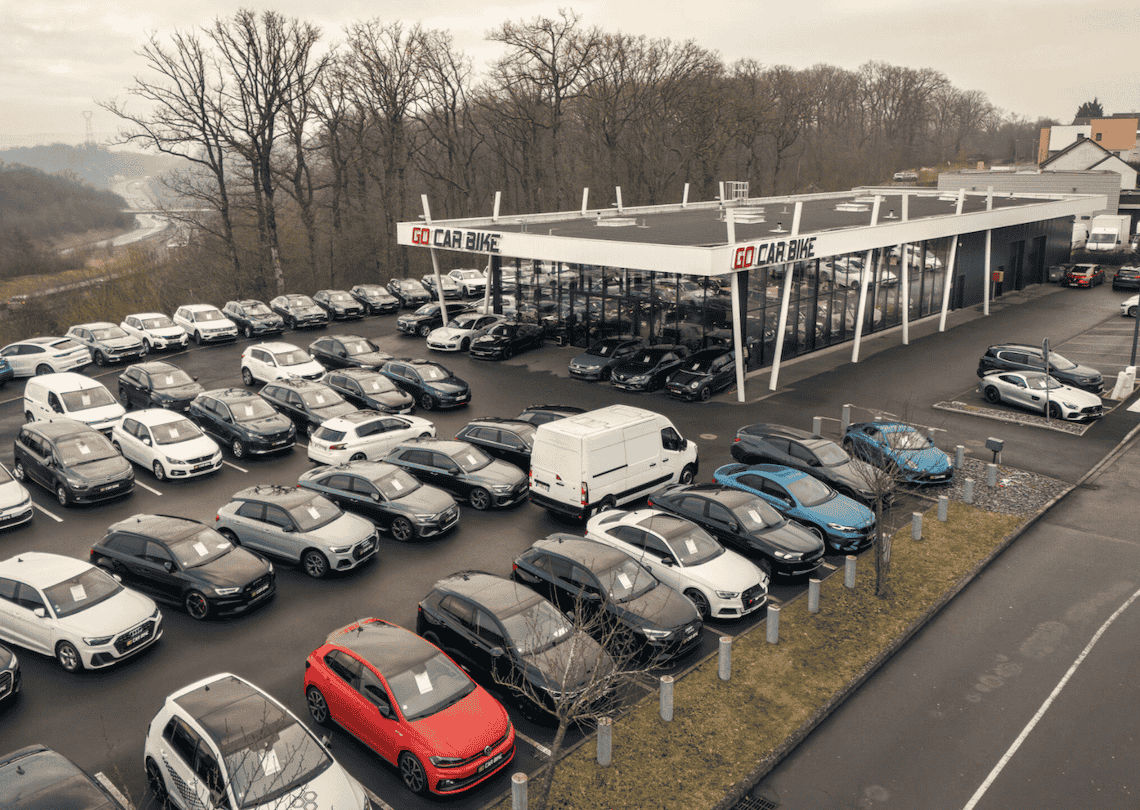
Anyone who works in automotive logistics knows the scene: vast sites, filled to the horizon with cars that appear to be doing nothing. To the casual passer-by, they are car parks. To the industry, they are the nerve centres of a business in which timing, value and information are constantly out of balance.
These sites — compounds or vehicle processing centres — are not endpoints, but intermediate stages: places where vehicles do not simply wait, but are transformed from incoming stock into saleable products. And it is precisely there, in that apparent standstill, that it is determined how much a car will ultimately fetch and how quickly it will reach its next owner.
A market larger than new car sales
Anyone who thinks this logistics sector is mainly about new cars is looking at the wrong side of the market. In Europe, tens of millions of used cars are traded every year. The scale far exceeds that of new car sales.
| Characteristic | Value |
|---|---|
| Annual volume (EU + UK) | ± 40 million vehicles |
| Market value | ± €440 billion |
| Share of used cars | ± 2/3 of the market |
This means the compound is not a logistical detail, but a strategic link. While new cars move through the chain in a relatively predictable way, a used car arrives as an unknown quantity: with wear and tear, damage, missing paperwork or an unclear destination.
More workshop than car park
Anyone driving into a compound may see rows of cars, but miss what is happening behind them. Every vehicle goes through a series of steps that together determine whether, and how, it can be put back on the market.
| Process step | Activities |
|---|---|
| Intake | Registration, inspection |
| Engineering | Repair, reconditioning |
| Administration | Document checks, customs |
| Sales preparation | Photography, reporting |
| Logistics | Planning, transport |
The compound is therefore a place where logistics and technology converge. It is not just a storage facility; above all, it is a workplace: for repairs, valuation and trust.
Why a car stays for weeks
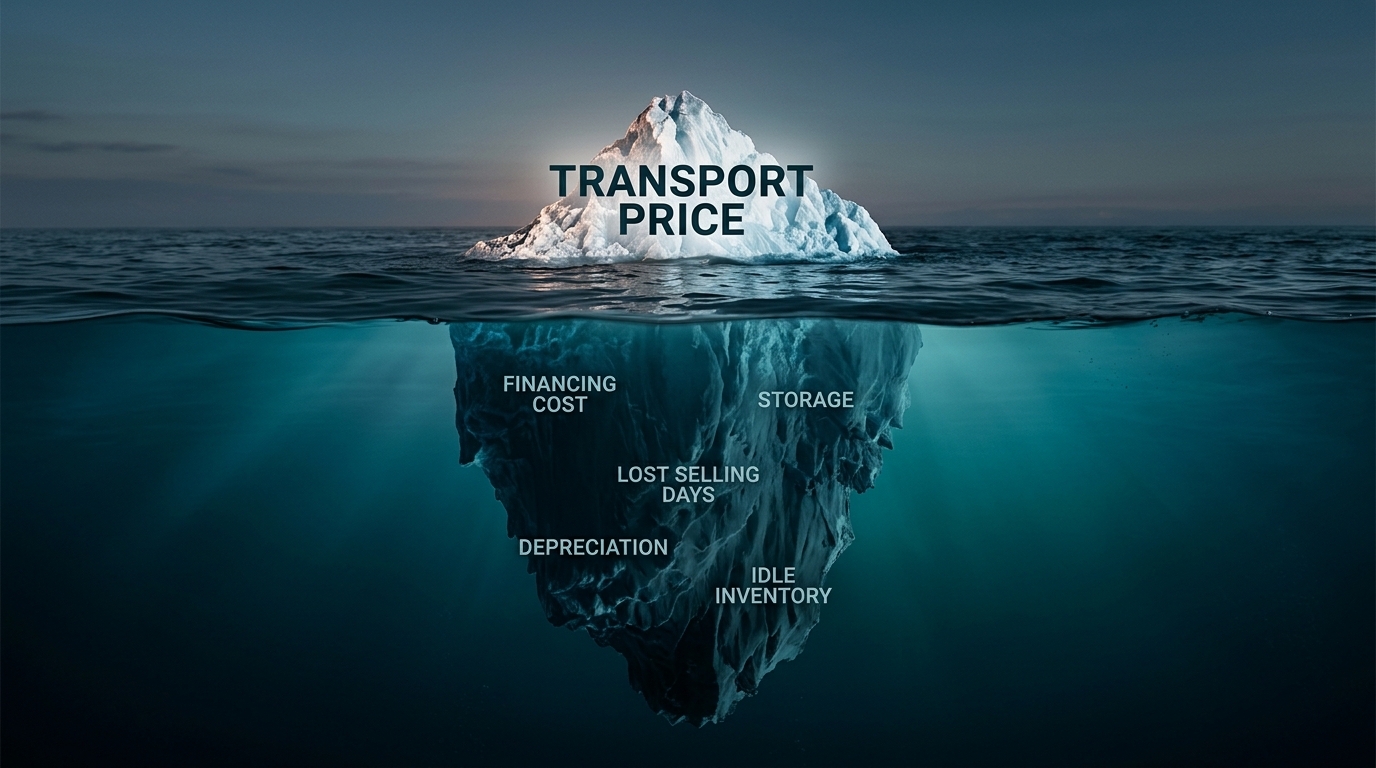
Yet a car that could be processed in a matter of hours may remain on such a site for weeks. That may seem inefficient, but it is usually the result of an accumulation of small delays.
In practice, it comes down to four necessary releases, each of which can become a bottleneck in its own right.
| Release | Reason for delay |
|---|---|
| Technical | Damage, faults, flat battery |
| Documentary | Paperwork, inspections, customs |
| Capacity | Transport shortage, slots |
| Location | Vehicle difficult to locate |
It is rarely a single problem that holds a car up. It is the combination of factors — a missing document, a full workshop, a missed transport slot — that extends the turnaround time.
Causes of delays
Anyone observing the situation in practice will spot patterns. Some causes recur time and again and have a structural impact on lead times.
| # | Factor | Impact |
|---|---|---|
| 1 | Waiting for owner’s decision | 2–6 weeks |
| 2 | Documents & inspection | Days–weeks |
| 3 | Transport capacity | 1–3 weeks |
| 4 | Refurbishment capacity | 1–3 weeks |
| 5 | Technical issues | Variable |
| 6 | Vehicle cannot be located | Hours–days |
| 7 | Keys / software | Days |
| 8 | Empty 12V battery | Very frequent |
| 9 | EV charge status | Increasingly important |
| 10 | Weather conditions | Occasionally significant |
It is striking that the biggest delays are often not physical, but organisational: waiting for a decision, a document or the next step in the chain.
Compounds in strategic locations
It is no coincidence that the largest compounds are located where they are. They cluster around ports, railway lines and logistics hubs — places where international flows converge.
| Region | Role | Key players |
|---|---|---|
| Antwerp–Zeebrugge | Largest hub worldwide | ICO, Mosolf |
| Bremerhaven | German export powerhouse | BLG |
| France (Le Havre) | Mediterranean gateway | CEVA |
| Spain (Barcelona) | Southern Europe | Grimaldi |
| Central Europe | Growth in used cars | Lagermax |
| NL/DE corridor | Inland connection | Koopman |
Here it becomes clear that the compound is not merely a local site, but part of a continental infrastructure.
Efficiency versus risk
The value of compounds is clear: they bring order to a chaotic flow. At the same time, they add an extra layer to the supply chain.
| Benefit | Impact |
|---|---|
| Buffer function | Less dependence on timing |
| Centralisation | More efficient transport |
| Standardisation | Fewer disputes over damage |
| Disadvantage | Effect |
|---|---|
| Extra link | Greater risk of damage |
| Outdoor storage | Weather risks |
| Complexity | Risk of inefficiency |
The question, therefore, is not whether compounds are necessary, but how well they are managed. That is the difference between profit and loss.
Electric cars and compounds
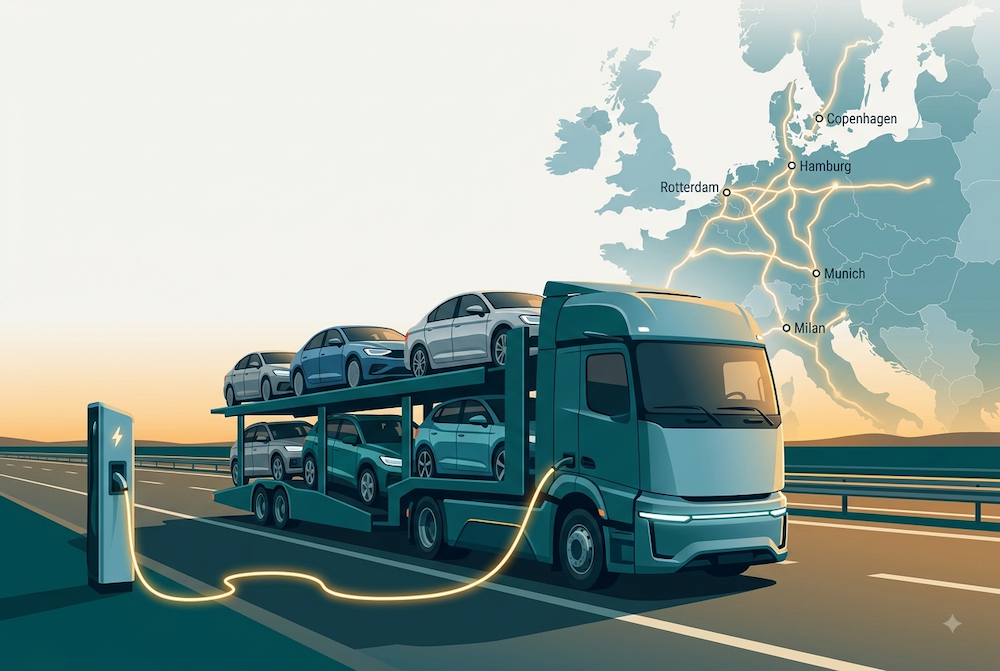
Meanwhile, the rise of electric vehicles is radically changing the rules of the game. What was once primarily a logistical issue is increasingly becoming a technical and energy-related challenge.
| Theme | Impact |
|---|---|
| Safety | Stricter rules, separate zones |
| Charging | New core activity |
| Weight | Fewer cars per transporter |
| Data | Battery health is becoming crucial |
An electric car that stands idle for too long loses not only time, but also usable energy. Charging is therefore no longer a side issue, but an integral part of the process.
Where the real gains lie
The instinct in the sector is often to invest in more capacity: more sites, more trucks, more infrastructure. But the greatest gains seem to lie elsewhere: in coordination and information.
| Solution | Impact |
|---|---|
| Pre-arrival data | Reduced waiting time |
| E-gates & slots | Fewer queues |
| AI inspection | Faster reporting |
| Yard automation | Less searching |
| EV operating model | More efficient charging |
| KPIs by cause | Greater insight |
The compound of the future is therefore less a physical location than a digital hub.
From car park to control room
What once began as a practical solution — a place to park cars temporarily — has evolved into a strategic tool.
This is where it is determined how quickly a vehicle moves through the supply chain, how much value it retains and how much margin remains. In a market that is becoming increasingly international, digital and complex, power is shifting to the parties that have the firmest grip on this intermediate phase.
The largest sites do not necessarily win. The winners are those that best align information, processes and logistics.
What appears to the outside world as a field of stationary cars is, in reality, a place where everything is in motion.