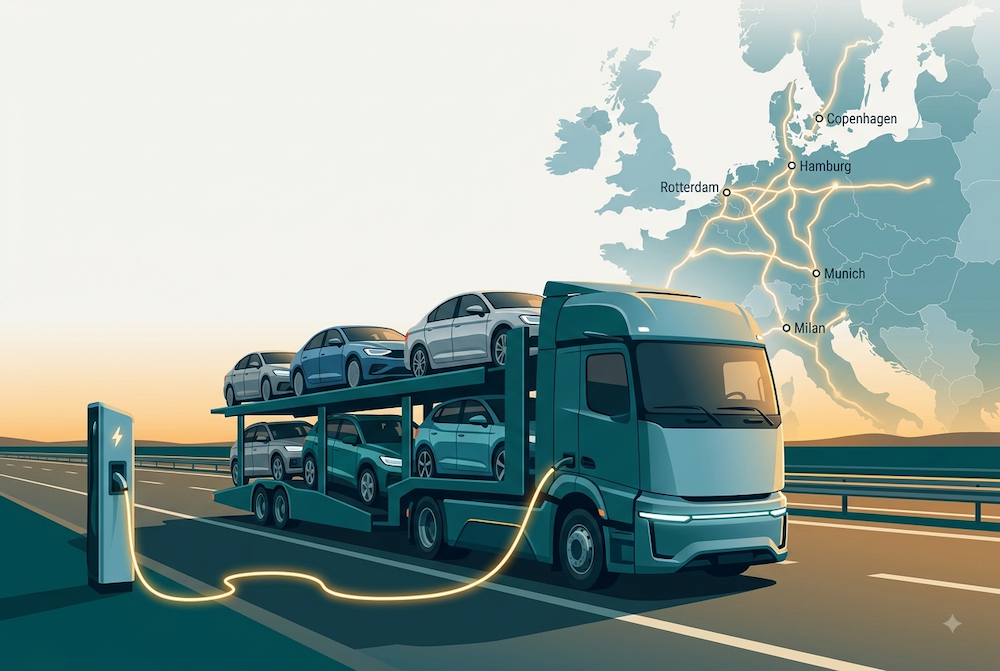
Elektro-Lkw sind auf Europas Straßen immer häufiger zu sehen. Im Autotransport speziell verläuft dieser Wandel jedoch deutlich langsamer als im übrigen Transportsektor. Wer jetzt ein ESG-Ziel festlegt oder einen Transportpartner nach Nachhaltigkeitskriterien auswählt, möchte wissen, woher diese Lücke kommt. Und vor allem: Welche Routen können schon elektrisch fahren, und wo dauert es noch Jahre?
Diese Lücke liegt nicht an der Technik. Sie liegt an der Ladeinfrastruktur entlang der Route. Die gibt es auf manchen europäischen Korridoren bereits, auf den meisten aber noch lange nicht.
Die Zahlen: Die Elektrifizierung beschleunigt sich, aber nicht überall
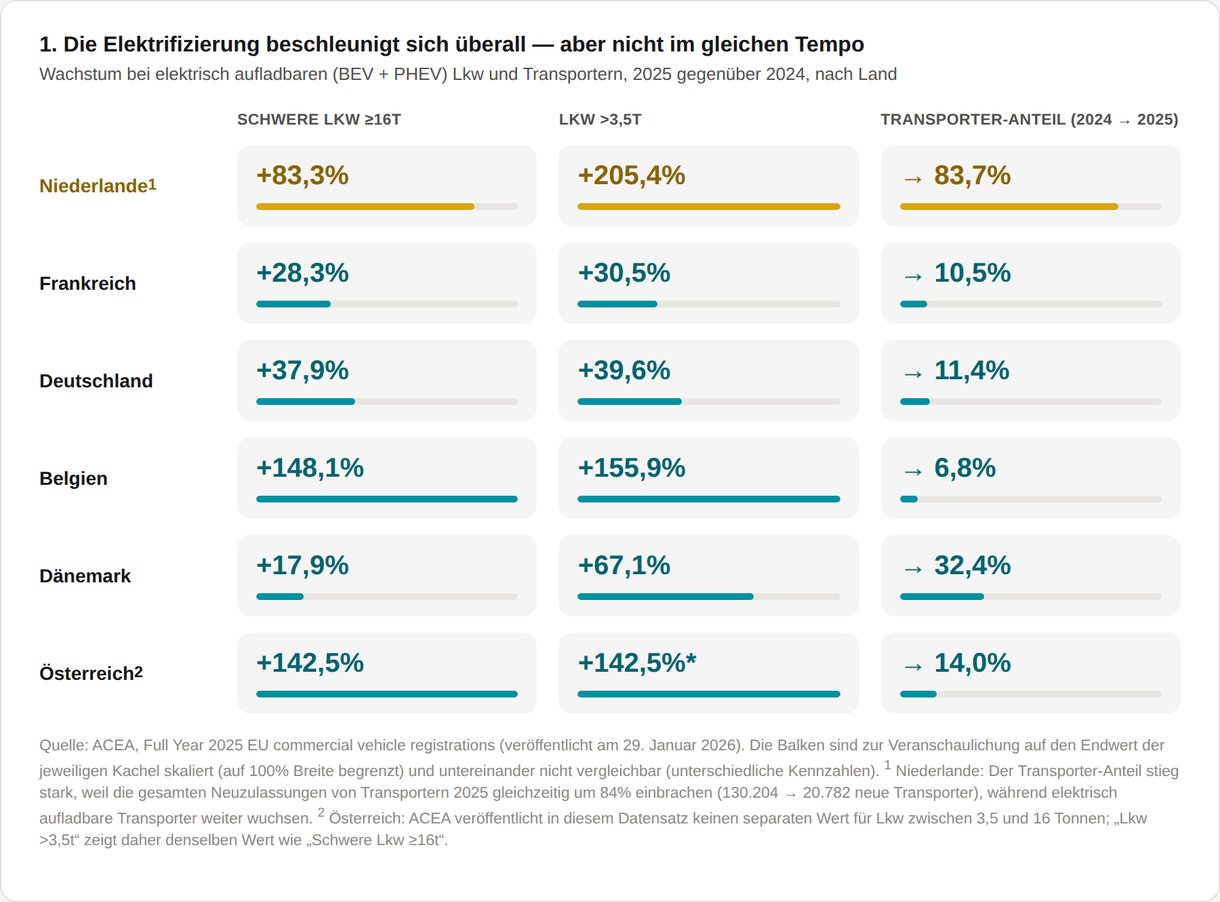
Im breiteren europäischen Transportsektor geht es schnell voran. Laut Zahlen, die ACEA über Logistik Heute veröffentlichte, registrierte die EU 2025 rund 5.000 neue Elektro-Lkw über 16 Tonnen, 51 % mehr als ein Jahr zuvor.
Die Niederlande liegen dabei vorn. Das Wachstum bei elektrischen mittelschweren und schweren Lkw lag hier bei 205 % und entspricht 16 % aller EU-Zulassungen in dieser Klasse. Auch bei Transportern geht es schnell voran: Der Anteil elektrischer Transporter an den Neuzulassungen stieg innerhalb eines Jahres von 6,1 % auf 11,2 %.
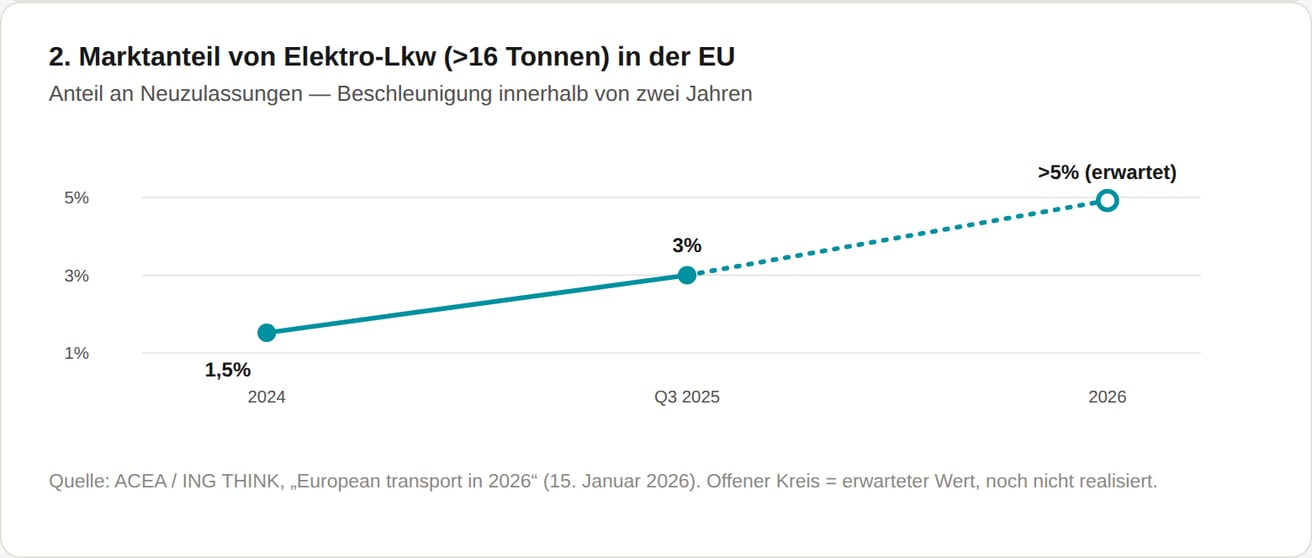
Auch auf EU-Ebene ist die Beschleunigung deutlich sichtbar: Der Marktanteil neu zugelassener Elektro-Lkw über 16 Tonnen stieg von 1,5 % im Jahr 2024 auf 3 % im dritten Quartal 2025, mit einer Erwartung von mehr als 5 % für das gesamte Jahr 2026.
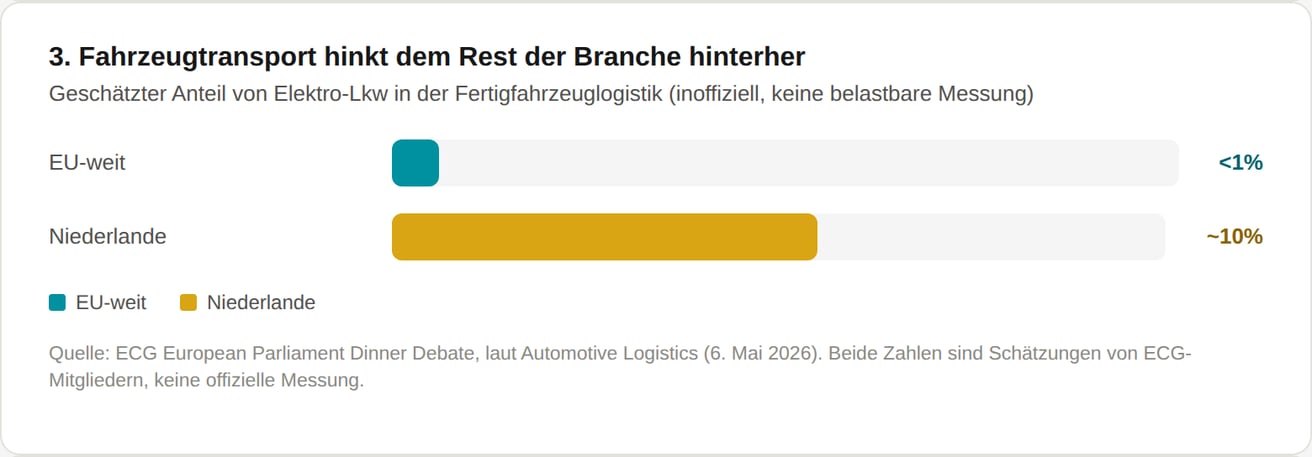
Im Autotransport speziell liegt dieses Tempo deutlich niedriger. Während eines European Parliament Dinner Debate der ECG im Mai 2026 wurde der Anteil von Elektro-Lkw in der Fertigfahrzeuglogistik EU-weit auf unter 1 % geschätzt. Ein niederländisches ECG-Mitglied nannte für die Niederlande selbst eine Schätzung von rund 10 %. Beide Zahlen sind inoffiziell; eine belastbare Messung gibt es noch nicht. Die Richtung ist jedoch eindeutig: Der Rest des Sektors bewegt sich schneller als der Autotransport.
Ein Teil dieser Beschleunigung kommt nicht aus Ambition, sondern aus der Regulierung: Die niederländische Lkw-Maut macht ältere Diesel-Lkw pro Kilometer spürbar teurer, während Elektro-Lkw einen deutlich niedrigeren Tarif erhalten. Das verschiebt die Ersatzentscheidung bei Transportunternehmen in Richtung Elektro, unabhängig von jedem Nachhaltigkeitsziel. Die Maut wirkt damit als ein unbeabsichtigter, aber wirksamer Hebel für die Elektrifizierung.
Die zwei Korridore, die bereits vorangehen
Nicht jede Route befindet sich in derselben Phase. Zwei TEN-V-Pilotkorridore liegen nachweislich vorn: Skandinavien–Mittelmeer und Nordsee–Ostsee. Länder wie die Niederlande, Deutschland und Belgien haben Roadmaps für diese Korridore verabschiedet.
| TEN-V-Pilotkorridor | Verabschiedet von |
| Skandinavien–Mittelmeer | Belgien, Dänemark, Deutschland, Litauen, Malta, die Niederlande, Österreich, Polen, Schweden |
| Nordsee–Ostsee | Belgien, Dänemark, Deutschland, Litauen, Malta, die Niederlande, Österreich, Polen, Schweden |
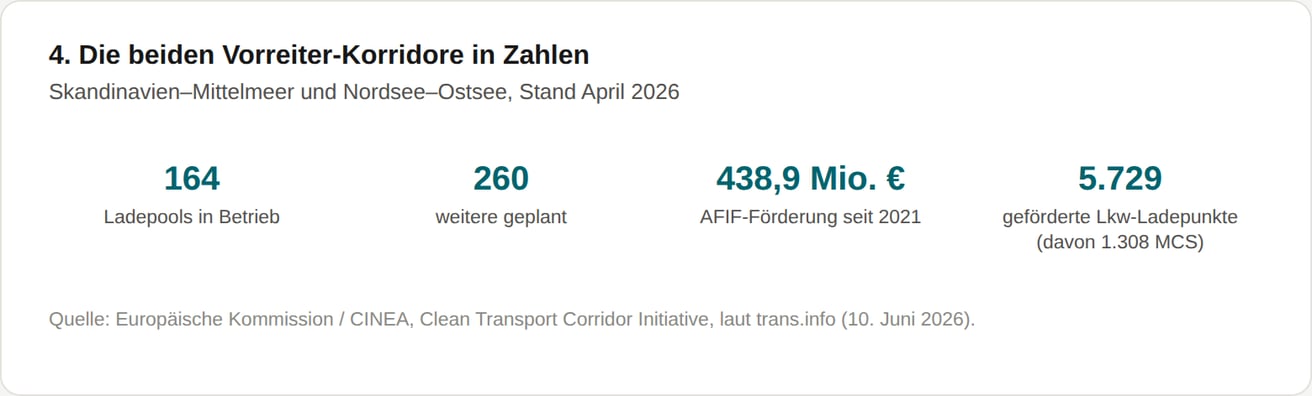
Zusammen zählten diese beiden Korridore im April 2026 bereits 164 operative Ladepools für den Schwerlastverkehr, mit 260 weiteren in Planung.
Diese Zahlen wurden von der Europäischen Kommission und CINEA im April 2026 veröffentlicht. Sie kommen zu einer breiteren Investition hinzu: Die Alternative Fuels Infrastructure Facility (AFIF) stellt 438,9 Millionen Euro für 5.729 Ladepunkte für den Schwerlastverkehr bereit, darunter 1.308 Megawatt-Charging-System-Installationen.
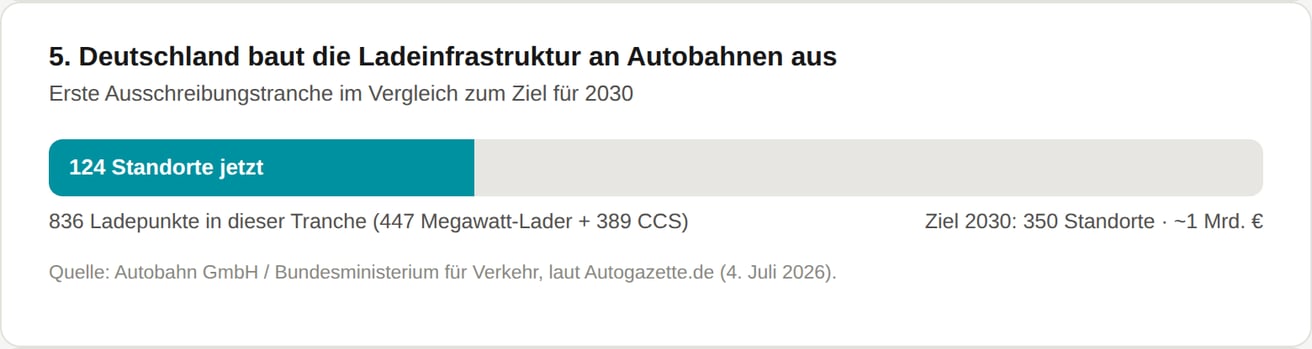
Deutschland, eines der Länder, die die Roadmaps verabschiedet haben, hat inzwischen selbst konkret mit dem physischen Ausbau begonnen. Die Autobahn GmbH vergab Anfang Juli 2026 die ersten Aufträge für Ladeinfrastruktur entlang deutscher Autobahnen: 124 Standorte mit 836 Ladepunkten in der ersten Tranche, davon ein großer Teil Megawatt-Lader für den Schwerlastverkehr. Das Zielbild für 2030 sind 350 Standorte, mit rund 1 Milliarde Euro an Bundesmitteln. Ein solcher nationaler Ausbau neben der EU-Finanzierung macht einen Korridor in der Praxis erst wirklich nutzbar.
Was diese Korridore auszeichnet, ist nicht allein die Finanzierung, sondern vor allem, dass mehrere Länder gleichzeitig vereinbart haben, dieselbe Route auszubauen. Dadurch entsteht ein durchgängiges Ladenetz statt einzelner Ladepunkte, die an der Grenze enden.
Warum die meisten Routen noch nicht bereit sind
Der CEO von MAN fasste das Problem während der ECG-Debatte so zusammen: "the challenge is not the equipment." Der Netzanschluss, die Genehmigungen und die unvollständige Ladeinfrastruktur entlang grenzüberschreitender Routen bremsen die Elektrifizierung, nicht die Lkw selbst.
Im Autotransport ist das besonders schwierig. Andere Sektoren fahren häufig feste, vorhersehbare Routen zwischen zwei Punkten. Beim Autotransport wechseln Be- und Entladeort bei jeder Fahrt. Das macht die Planung von Ladezeiten komplexer als bei einem Pendelverkehr.
Logistik Schmitt in Deutschland zeigt, wann es funktioniert. Das Unternehmen setzt drei elektrische Mercedes eActros auf einer kurzen, festen Pendelroute ein und spart dadurch 3.000 Euro Maut im Monat sowie 56 Tonnen CO₂-Emissionen im Jahr. Der Business Case funktioniert, sobald die Route kurz und vorhersehbar ist. Für grenzüberschreitenden oder variablen Autotransport fehlen diese Zahlen noch.
Auch alternative Kraftstoffe im Autotransport spielen deshalb schon jetzt eine Rolle. Nicht jede Route muss auf eine Ladesäule warten, um nachhaltiger zu werden.
Was das für alle bedeutet, die jetzt planen
Für alle, die einen Transportpartner nach Kriterien für nachhaltigen Autotransport auswählen, ist das Bild differenzierter als "elektrischer Transport ist schon da" oder "elektrischer Transport ist noch weit entfernt." Die Antwort hängt von der Route ab.
Auf den beiden Vorreiter-Korridoren könnte elektrischer Autotransport innerhalb eines absehbaren Zeitraums zu einer realistischen Alternative werden. Die Amortisationszeit (TCO-Break-even) gegenüber Diesel wird in den Niederlanden auf 2 bis 5 Jahre geschätzt, wobei diese Spanne stark vom Lkw-Typ und der Jahresfahrleistung abhängt. Auf anderen Routen, vor allem grenzüberschreitenden, bleibt die Infrastruktur vorerst der limitierende Faktor.
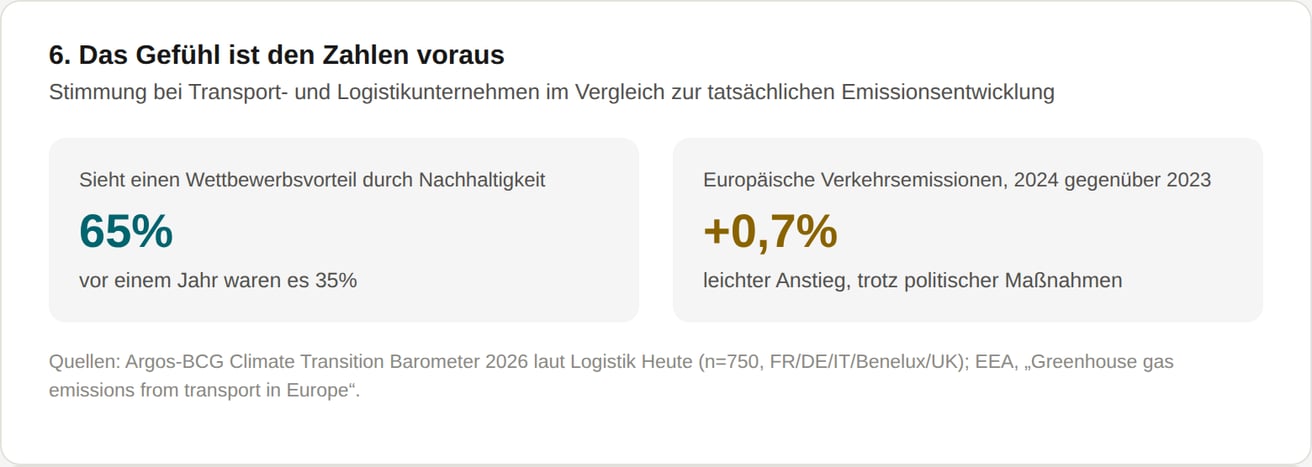
Diese Lücke ist auch für die ESG-Berichterstattung relevant. 65 % der europäischen Transport- und Logistikunternehmen geben inzwischen an, einen Wettbewerbsvorteil durch Nachhaltigkeit zu erfahren, gegenüber 35 % ein Jahr zuvor. Gleichzeitig stiegen die europäischen Transportemissionen 2024 noch leicht, um 0,7 %. Das Gefühl, dass der Sektor vorankommt, liegt damit vor dem, was die Zahlen zeigen. Für Logistik für OEMs und andere Akteure, die konkrete Fortschritte nachweisen möchten, lohnt sich daher der Blick auf das, was auf den eigenen Routen schon möglich ist, mehr als auf die allgemeine Stimmung im Sektor.
Wer weiß, welche Korridore bereit sind und welche nicht, kann seine Planung entsprechend ausrichten. Wir verfolgen diese Ladeinfrastruktur pro Korridor, damit wir pro Route das passende Transportmittel wählen können, innerhalb von Autotransport in Europa. Möchten Sie wissen, was das für Ihre Routen bedeutet? Nehmen Sie Kontakt mit uns auf.
Häufig gestellte Fragen
Was ist ein TEN-V-Ladekorridor?
TEN-V steht für das transeuropäische Verkehrsnetz: die wichtigsten europäischen Verkehrsrouten für Straße, Schiene und Wasser. Auf zwei dieser Korridore, Skandinavien–Mittelmeer und Nordsee–Ostsee, bauen mehrere Länder gemeinsam Ladeinfrastruktur für den Schwerlastverkehr aus.
Wann ist elektrischer Autotransport genauso schnell wie Diesel?
Das ist von Route zu Route unterschiedlich. Auf kurzen, vorhersehbaren Routen mit ausreichender Ladeinfrastruktur ist elektrischer Transport schon heute machbar. Auf grenzüberschreitenden oder variablen Routen fehlt diese Infrastruktur oft noch, wodurch elektrischer Transport dort derzeit weniger praktikabel ist.
Welche Länder liegen bei der Ladeinfrastruktur für Lkw vorn?
Die Niederlande, Deutschland und Belgien gehören zu den Ländern, die die beiden TEN-V-Pilotkorridore verabschiedet haben. Die Niederlande liegen beim Zulassungswachstum von Elektro-Lkw zudem deutlich über dem EU-Durchschnitt.
Quellen: ACEA-Zahlen über Logistik Heute (25. Juni 2026); ECG European Parliament Dinner Debate, Bericht Automotive Logistics (6. Mai 2026); Europäische Kommission / CINEA, Clean Transport Corridor Initiative, Bericht via trans.info (10. Juni 2026); Autobahn GmbH / Bundesministerium für Verkehr, Bericht Autogazette.de (4. Juli 2026); ING THINK, "European transport in 2026: A capacity reset, replacement waves, and the electrification push" (15. Januar 2026); ING, "Neue Lkw-Maut zwingt Transportsektor zu schnellerer Erneuerung" (ing.nl).