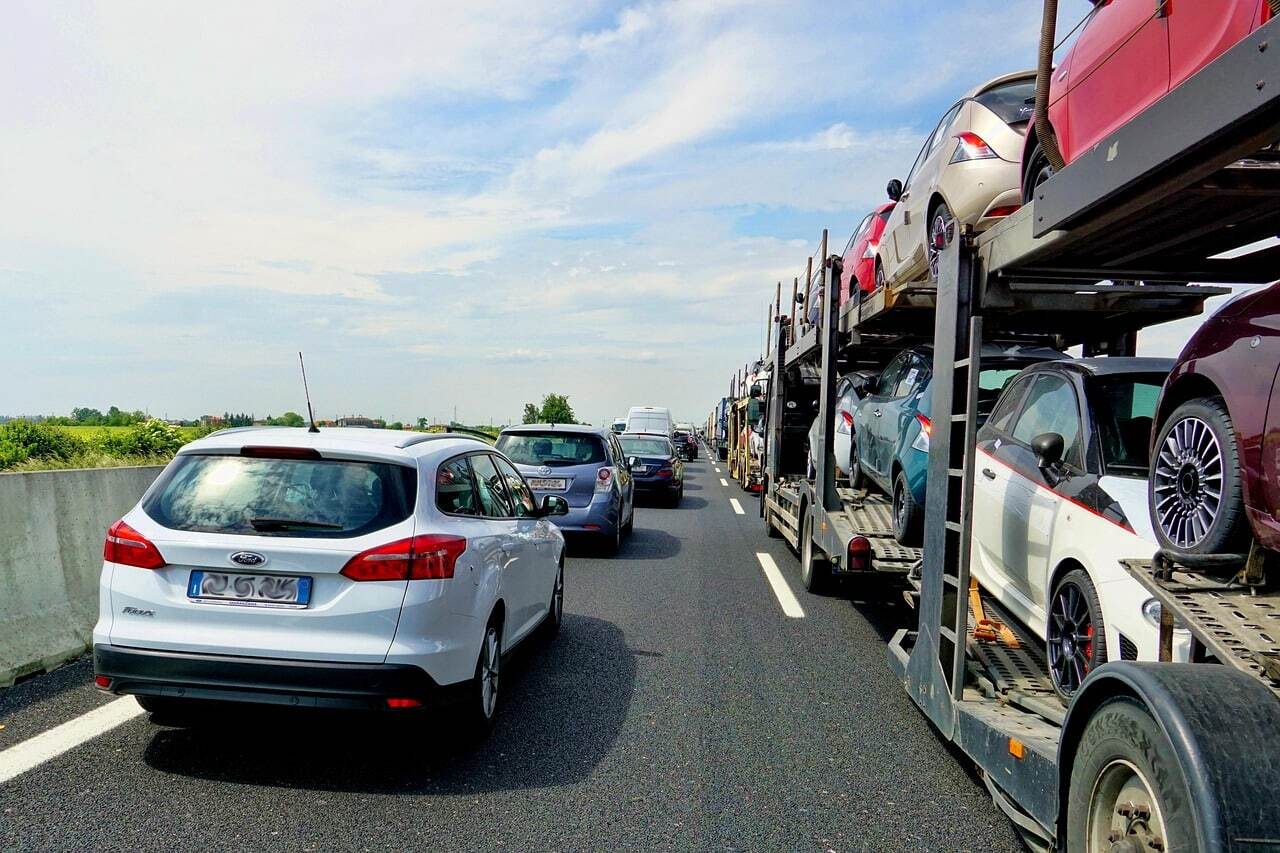
Car transport is rarely discussed within the remarketing chain. That is, until transport grinds to a halt. Only then does it become clear how dependent the sector truly is: no transport means no delivery, no reconditioning, no sales. It is the silent engine driving the entire chain, and at times, that engine falters.
In this blog, we outline the consequences for automotive remarketing when car transport fails to run smoothly, who is affected, and why structural solutions go beyond simply adding more trucks.
Transport as a bottleneck
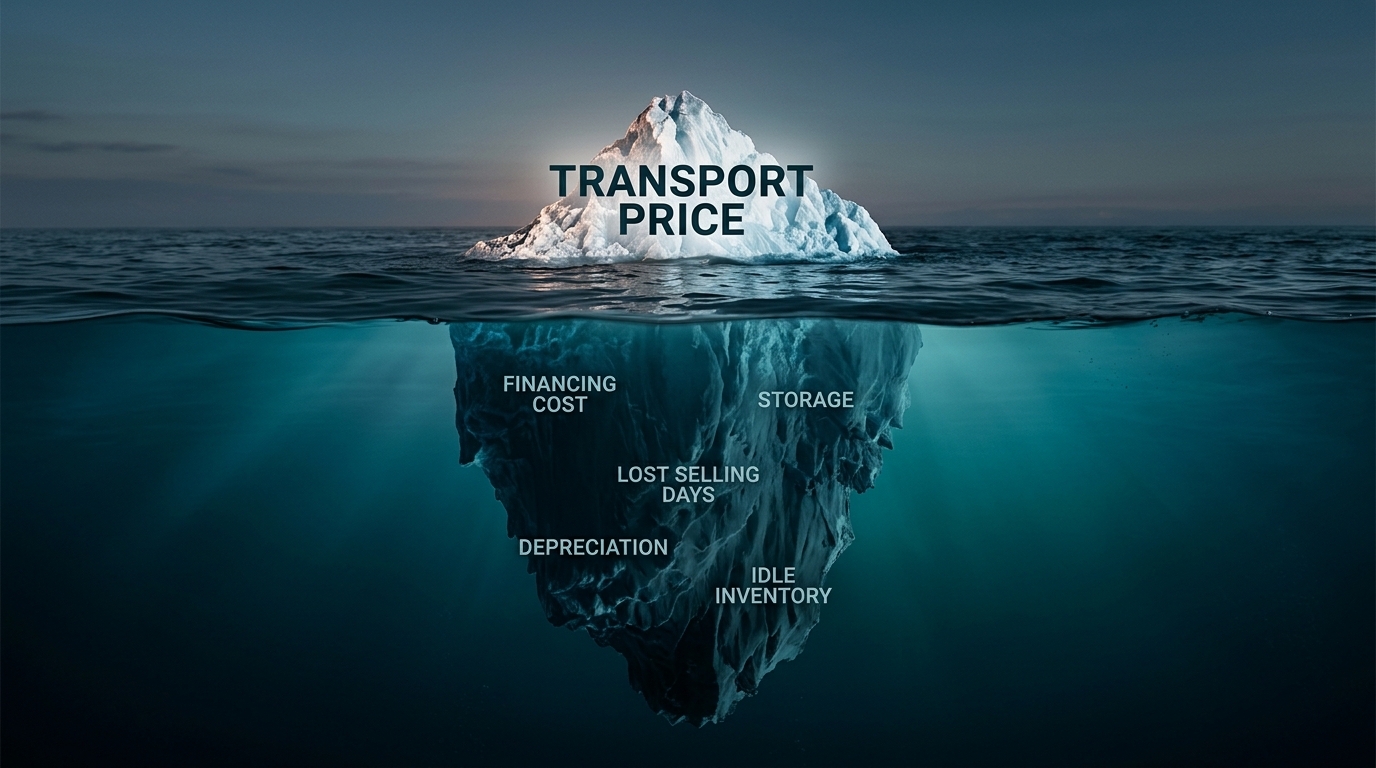
In remarketing, everything revolves around flow. A stationary vehicle costs money, literally, every day. It is not sold, not reconditioned, not photographed, not invoiced. Any delay in physical transport disrupts the entire chain, from procurement to delivery.
What makes this particularly frustrating is that car transport is a true bottleneck process. There is no alternative route. A car that needs to travel from Germany to the Netherlands cannot be flown if the lorry is full. The entire chain is forced to wait.
A vehicle that cannot physically move from A to B brings the entire process of sales, reconditioning and financial settlement to a standstill.
The market is large and the margins are small
To put the scale into perspective: in 2024, there were approximately 6.5 million second-hand car transactions in Germany, over 5.3 million in France and more than 2 million in the Netherlands. The vast majority of these vehicles must be physically moved at some point.
The capacity crisis in road transport is no abstract concept in this context. Both the ECG and the IRU estimate that there is currently around one-third less lorry capacity available than before the coronavirus pandemic. At the same time, delivery times for new car transporters have risen to fifteen months or more. Expansion is anything but a quick fix.
The result is a structural shortage of capacity in a market that shows no signs of shrinking. In such a context, every loss of efficiency is magnified.
Who is affected and how
The consequences of transport shortages and delays are not evenly distributed. They manifest differently depending on one’s position in the supply chain.
Dealers
For car dealers, the key metric is ‘days on lot’: every day a vehicle sits unsold on the forecourt is a day in which value erodes. Transport delays increase days on lot, reduce profitability and force suboptimal decisions, such as collecting vehicles themselves or accepting longer, less predictable delivery times.
Fleet owners and leasing companies
When a vehicle remains on the forecourt after a contract has expired due to unavailable transport, it shifts from ‘incoming cash flow’ to ‘asset on yard’. Exposure to price volatility in the used-car market increases with each passing day. In a market characterised by sharp price fluctuations, this is far from a theoretical risk.
Online remarketing platforms
For platforms such as CarOnSale, Autoproff and CarCollect, logistical reliability is not an afterthought, it is central to their value proposition. Transport shortages force difficult trade-offs: absorb higher transport costs or pass them on to customers, or accept longer delivery times that directly undermine the customer experience. There is no cost-free option.
Regulatory burden by country: three different scenarios
In addition to the structural capacity shortage, supply chain vulnerability varies by country due to local regulations and geography.
| Country | Primary risk factors | Impact on the supply chain |
|---|---|---|
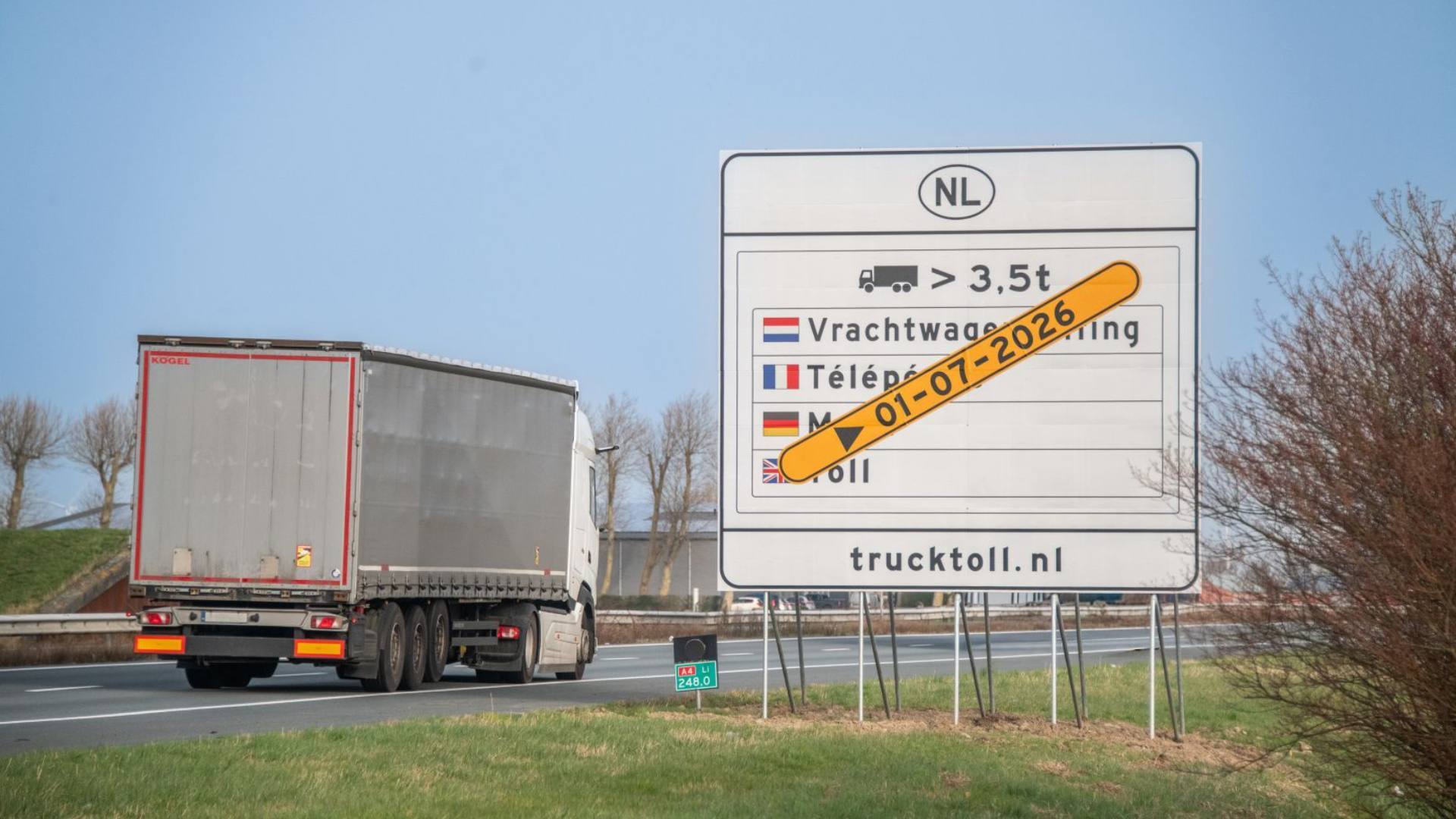
| Germany | CO₂ toll for vehicles over 3.5 tonnes, weekend driving bans and strict loading standards (VDI 2700) | Significant cost and compliance shock. The ECG warns that a substantial proportion of the fleet faces operational risks without an adequate transition period. |
| France | General driving bans at weekends and on public holidays, combined with structural vulnerability to strikes | Narrow time windows create unpredictable peak pressure. Physical blockades can bring entire transport flows to a standstill. |
| Netherlands | Heavy reliance on import corridors via Germany and the Port of Antwerp | Derivative scarcity: disruptions elsewhere in Europe have a direct impact on Dutch availability and lead times. |
Disruptions in Germany or France have an almost immediate impact on availability in the Netherlands. The supply chain does not stop at national borders.
The paradox of ‘own capacity’
A logical response to scarcity is to secure one’s own transport capacity: dedicated contracts, fixed carriers, or owned vehicles. Larger players are increasingly adopting this approach. It is understandable, but it comes with unintended consequences.
When capacity is withdrawn from the open market, overall efficiency declines. Vehicles often run partially loaded or must return empty to meet contractual obligations. On paper, capacity remains unchanged. In practice, its effective utilisation drops.
According to the ECG, this behaviour paradoxically reduces overall market efficiency. It is a classic collective action problem: each company acts rationally in its own interest, yet the system as a whole performs worse.
What this requires of the sector
Ordering more lorries will not solve the problem, certainly not in the short term. What the sector needs is better coordination of existing capacity. This requires:
- Greater transparency around supply and demand for transport capacity, minimising partially empty journeys and unnecessary return trips.
- Smarter routing, with platform logic matching available capacity to real-time transport demand.
- Collective thinking about how dedicated capacity is deployed, focusing on overall supply chain efficiency rather than individual optimisation.
Road transport may be an invisible part of the process, but within the remarketing chain it is a critical prerequisite. Any effort to optimise the chain must therefore include transport.
How TransConnect is tackling the capacity crisis
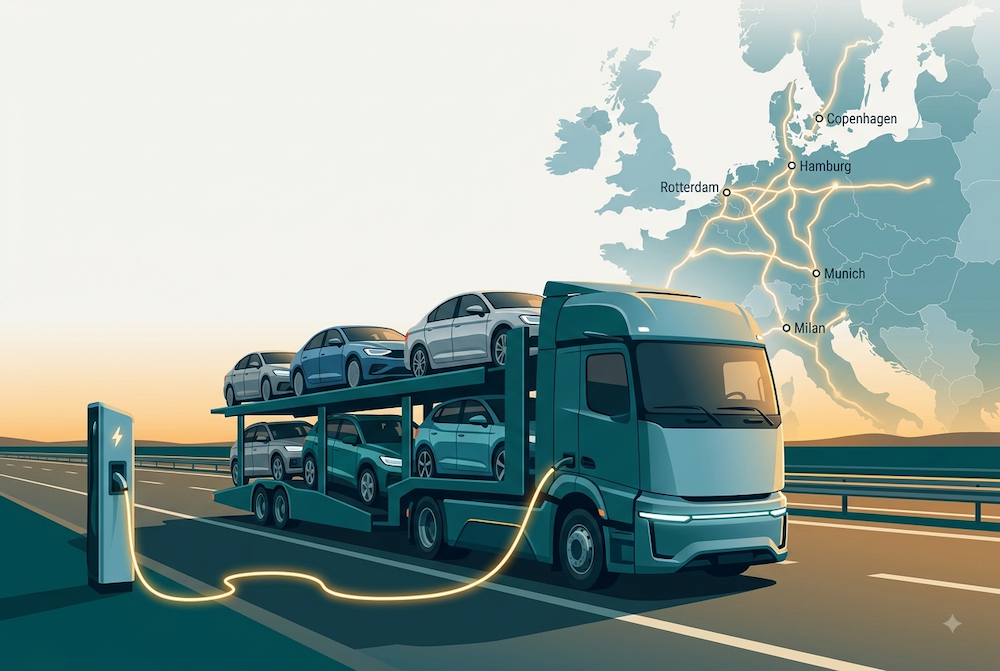
In a market where structural shortages have become the norm, simply adding more lorries is not the answer. TransConnect takes a different approach: rather than increasing capacity, the platform improves how supply and demand are matched. This is achieved through a multi-carrier pool of over 2,500 certified transport partners, combined with guaranteed capacity, rapid booking and personalised coordination for each shipment.
The immediate effect is shorter waiting times before vehicles are loaded. TransConnect reports an average loading time of four days. Orders are distributed across a large pool of hauliers, increasing acceptance rates and reducing rejections during peak periods. Smart consolidation and spot filling improve load factors per truck, ensuring available capacity is used more effectively. Paperwork and customer communication are managed end-to-end, including API integration, real-time order tracking, webhooks and document management, supported by an eCMR pilot for digital proof of delivery.
What this means for customers
For participants in the remarketing chain, TransConnect’s approach delivers measurable results. Shorter lead times improve stock turnover for dealerships and reduce exposure to price volatility for leasing companies. Greater operational certainty, even in tight market conditions, enables more reliable planning and reduces the need for manual coordination.
The partnership with CarOnSale illustrates what this can achieve in practice: a 99% delivery success rate, an average lead time of 4.4 days, and delivery times reduced by half compared with the baseline. Increasing the order acceptance rate from 95% to 98% for an annual volume of 10,000 vehicles results in approximately 300 fewer delayed vehicles. This has an immediate impact on stock turnover and operational scalability. In a structurally constrained market, that is no marginal gain.