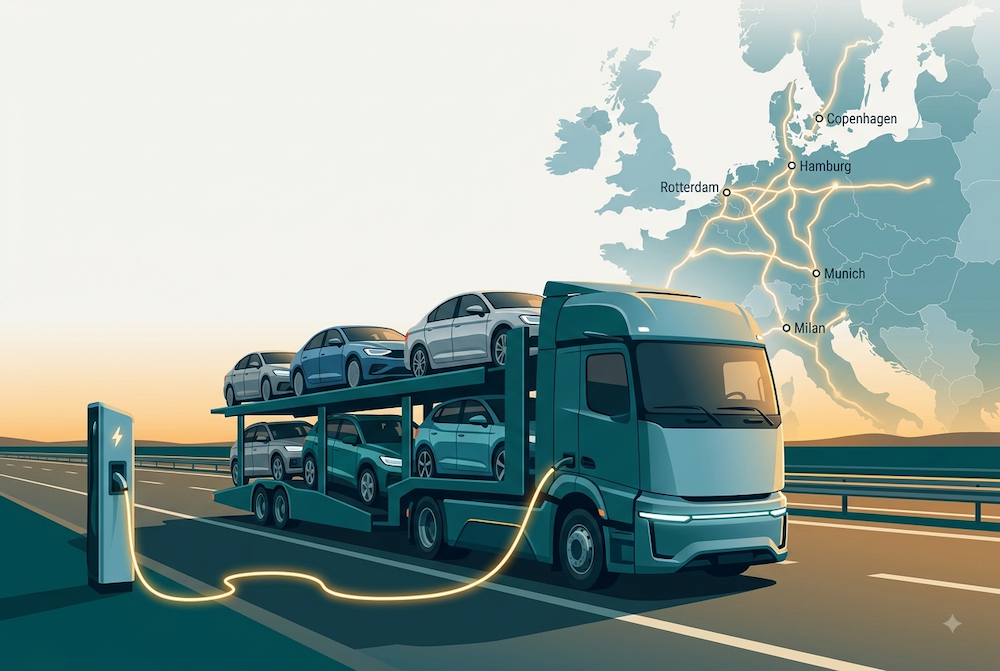
In 2026, something fundamental will change for everyone involved in Dutch car transport: the truck levy will be introduced. We'll tell you more about exactly what this means in this article. For the operational consequences — including its sharper focus on efficiency and load factor — we have a separate analysis. To put the Dutch numbers in context, see how they compare with tolls in Germany, Austria, France and Belgium.
What does the truck levy entail?
Starting in 2026, the Dutch government is introducing a charge based on kilometers driven by trucks on main roads and part of the secondary road network. The goal: a fairer model of infrastructure use and an incentive towards cleaner and more efficient transport.
For international car transporters with trips that often start or end in the Netherlands, but extend across Europe, this means that foreign trips are also partly affected. Not only financially, but especially operationally. Combined with the broader picture of what car transport will really cost in 2026, this is one of several reasons fixed-price lists are quickly becoming unworkable.
What does the truck levy mean in concrete terms?
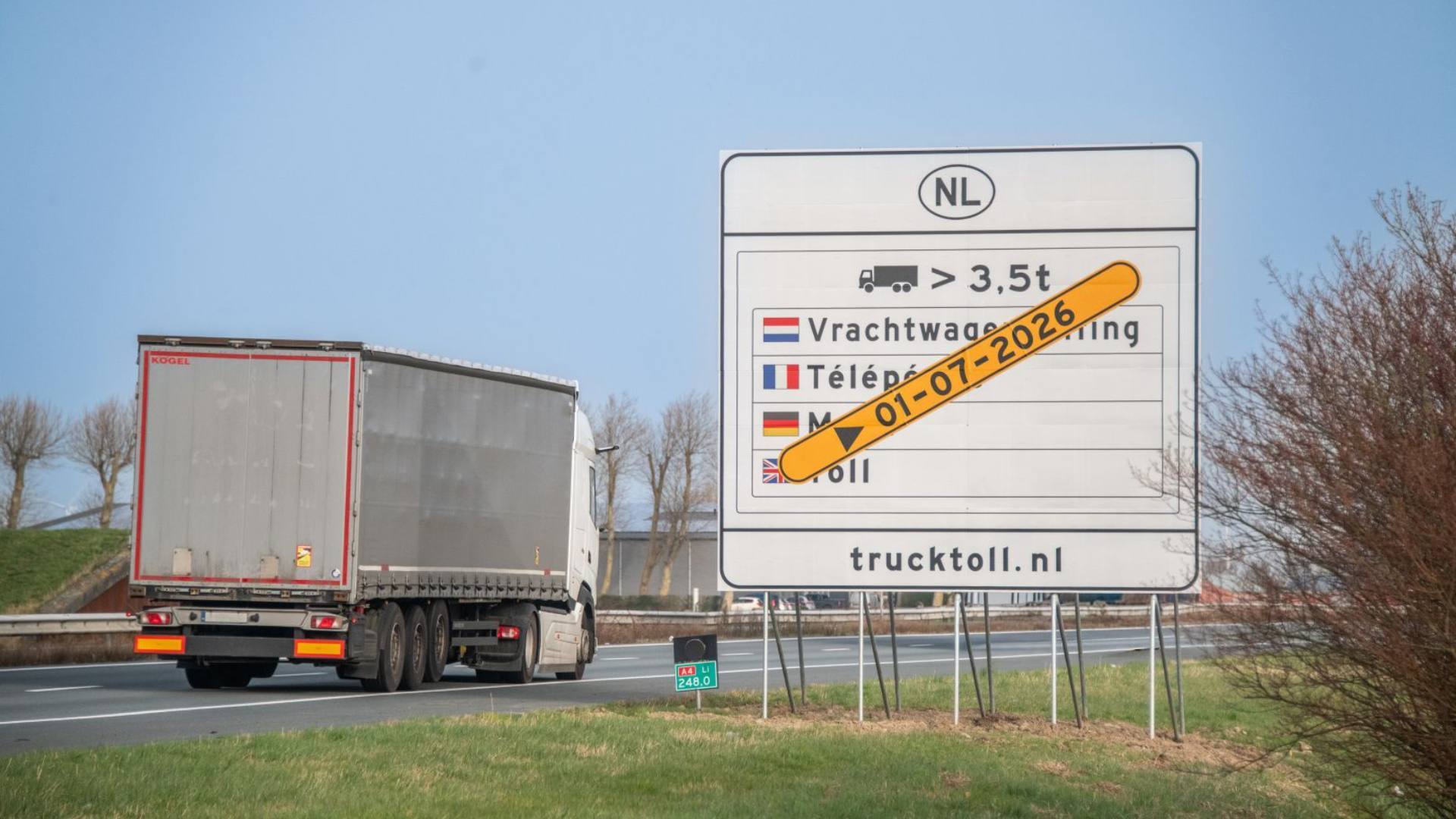
FromJuly 1, 2026 , a truck levy will apply in the Netherlands for all vehicles with a permissible total weight of more than 3,500 kilograms, including foreign hauliers. The charge is based on the "user pays" principle and partly replaces the current system of motor vehicle tax (MRB) and tax on heavy motor vehicles (BZM).
What does this mean in practice?
- Cost per kilometer: expected to be between €0.12 and €0.20, depending on the type of vehicle, weight, emission class (Euro class) and route driven.
- Payment structure: the charge will be collected automatically via an On Board Unit (OBU) that uses GPS to record mileage driven. This registration will be linked to a European interoperable system, similar to existing toll systems in Germany or Belgium.
- Where does it apply?The charge applies to a large part of the main road network as well as some provincial roads. The exact list of roads is still to be determined.
Important: this charge also applies to journeys only through the Netherlands, without loading or unloading.
To give you an idea : a full 8-loader for car transport (tractor + trailer + 8 cars) weighs on average between 25 and 33 tons. A smaller combination, such as an Iveco with trailer for 2 to 3 cars, is between 5.5 and 10 tons. Well above the 3,500-kilogram limit, in other words.
What will change for our customers?
For now (June 2025, ed.): nothing for now. But we believe that trust starts with transparency. The truck levy affects our sector not immediately tomorrow, but the day after tomorrow. That's why we choose to communicate about it today.
All our trips will continue to run as planned. But in the background we are actively preparing, so that we will not be faced with any surprises later on. For our transport partners, this also means we are working on tooling that surfaces toll-eligible kilometres in route planning so that empty legs become visible costs rather than hidden ones.
We do expect transportation in the Netherlands to become more expensive over time. The expected rates per kilometer are substantial, especially for vehicles with heavy diesel engines. Most transporters do not yet have fully electric trucks, which limits the scope for taking advantage of the lower rates for "greener" vehicles.
The savings through the elimination of MRB and BZM may only partially offset this.
Therefore, it cannot be ruled out that transport within the Netherlands will become relatively less attractive for certain types of trips. We take price effects into account, but at the same time look for ways to minimize the impact for our customers — particularly given that 2026 is shaping up as the year car transport undergoes structural change, with toll, fuel and capacity pressures arriving simultaneously.
We will keep you informed. Not until 2026, but as soon as we know more.