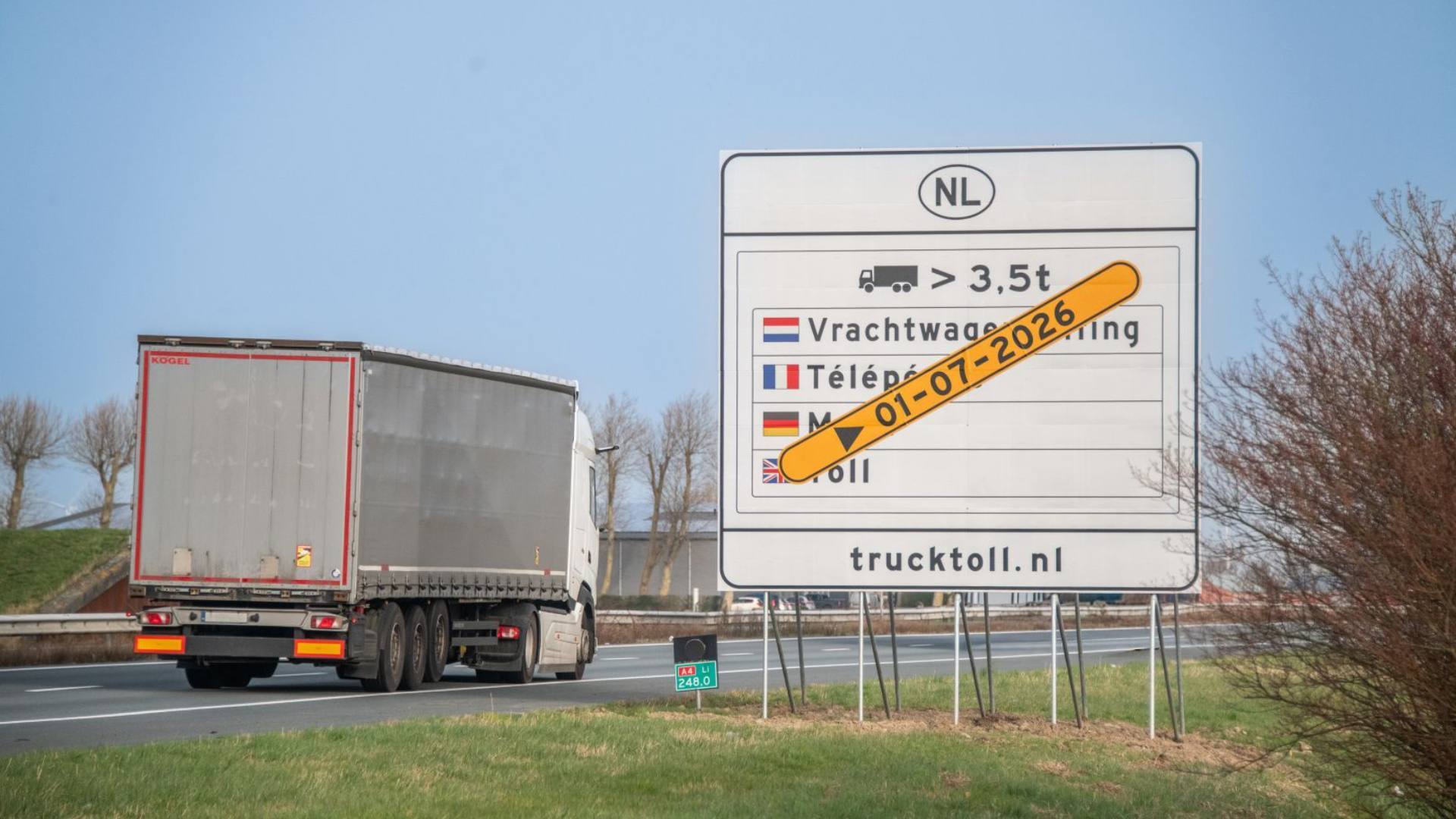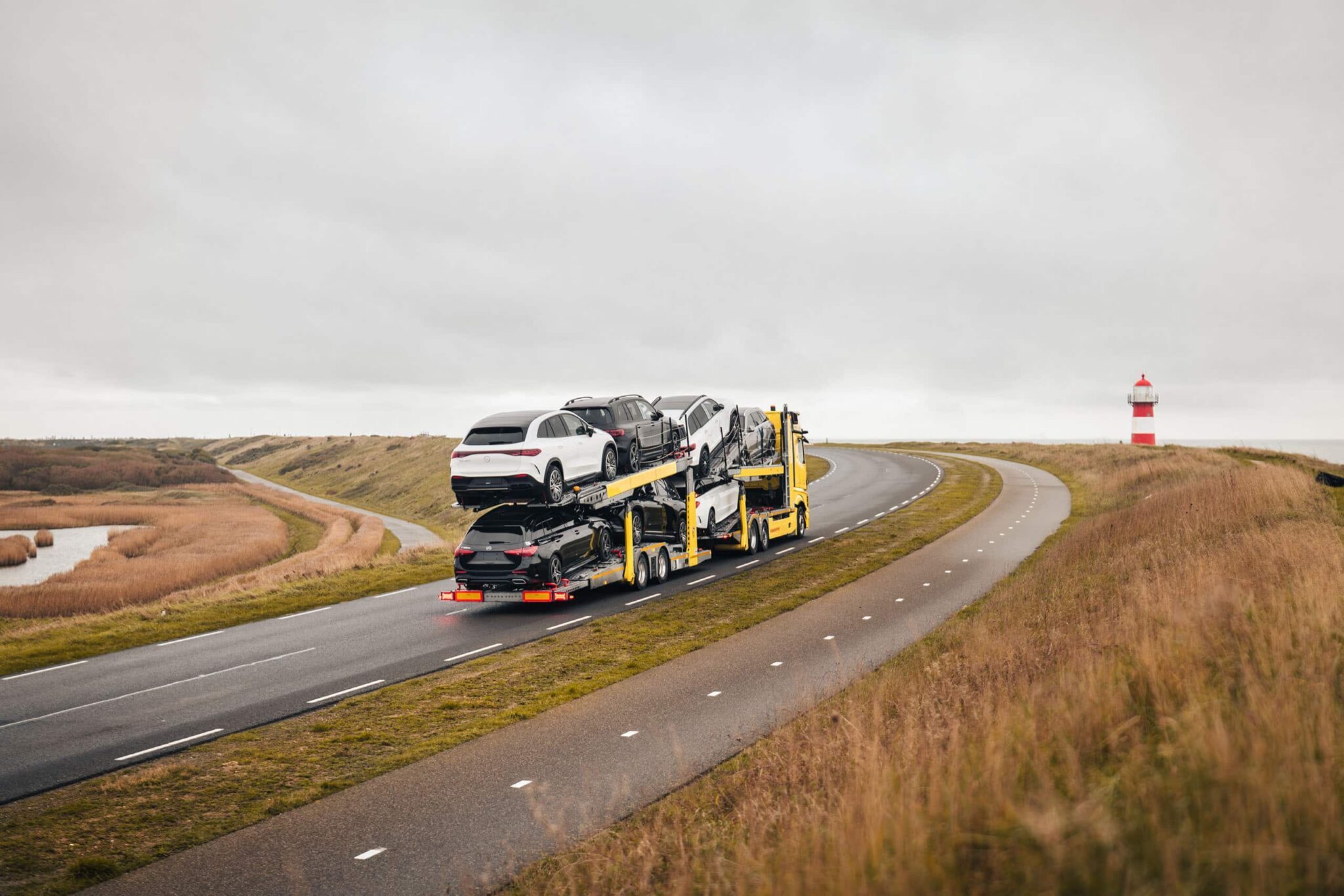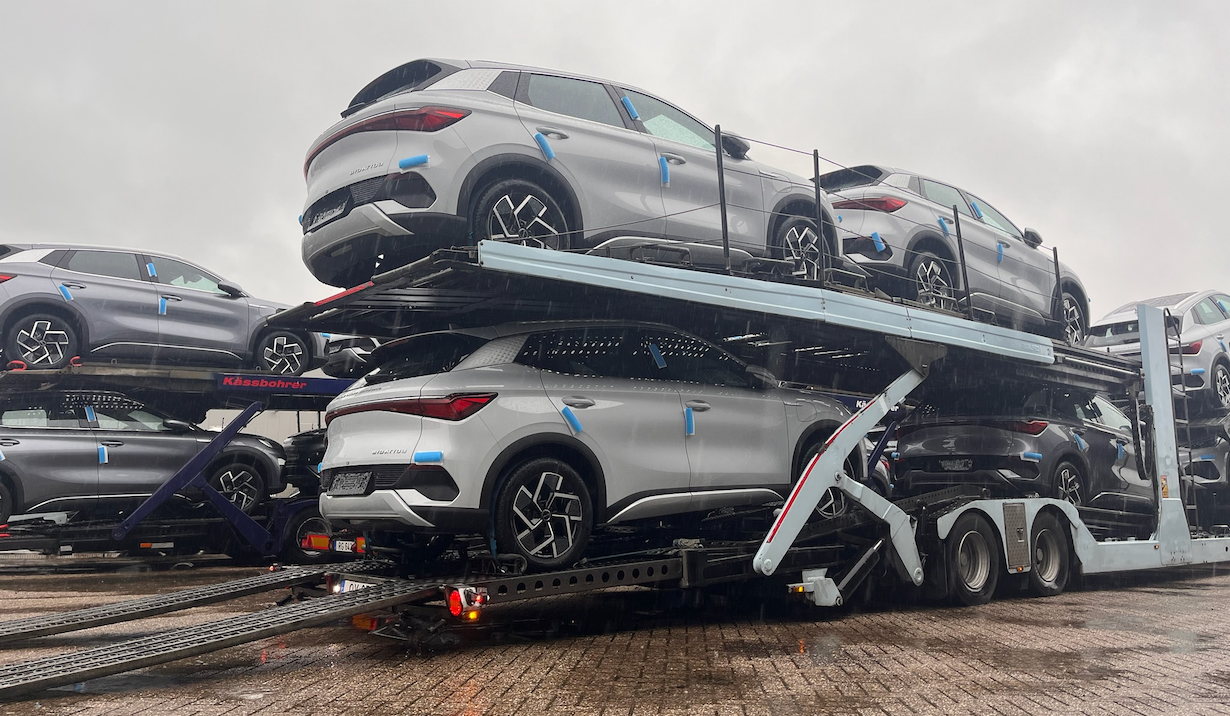
A lorry charge will be introduced in the Netherlands on 1 July 2026. From that date, owners of N2 and N3 lorries will pay per kilometre driven. This will decisively shift transport costs from fixed to variable: the more kilometres driven, the higher the bill.
For the operational details, see our explainer on the Dutch truck toll system in 2026; for the European cost picture, see our analysis of what 500 kilometres of tolls really cost in 2026 across Germany, Austria, France, Belgium and the Netherlands.
The scheme will replace the Eurovignette and apply to both Dutch and foreign lorries weighing over 3,500 kg. At the same time, road tax will be reduced or abolished, depending on the vehicle’s weight.
Pay-as-you-go
The charge depends on the number of kilometres driven, the maximum authorised mass and the vehicle’s CO₂ emissions. Cleaner and lighter lorries pay less, while heavier and more polluting vehicles pay more.
An on-board unit (OBU) automatically records the number of kilometres a lorry travels on roads where the charge applies. The costs are then invoiced via a toll service provider.
Direct impact on business operations
Because hauliers pay per kilometre, regardless of whether a lorry is travelling empty or full, efficiency becomes a decisive factor. Empty kilometres directly affect margins and are no longer an abstract optimisation issue but a concrete cost.
This significantly increases the importance of a high load factor. The better a journey is utilised, the lower the cost per unit transported. Companies that organise their network, planning and routes efficiently gain a clear competitive advantage. This is also what makes fixed price lists increasingly untenable — see our piece on the risks of fixed transport pricing for the broader pricing logic.
Smart freight consolidation and the use of spare capacity are no longer optional optimisations, but prerequisites for profitability.
Shift in the sector
The lorry toll is forcing transport companies to make tougher operational choices. These include:
- more efficient route planning
- load consolidation
- minimising empty mileage
- improved insight into transport flows
The extent to which these additional costs are passed on to customers will vary by carrier and market conditions. At the same time, the measure is putting pressure on margins in a sector that is already highly competitive — for transport partners connected to a digital platform, this also creates an opportunity to fill empty legs that would otherwise sit unused.
Incentive for sustainability
Alongside efficiency, sustainability in vehicle transport is a key objective of the levy. As rates are partly dependent on emissions, cleaner vehicles become financially more attractive. Subsidies are intended to accelerate the transition to zero-emission transport.
A significant portion of the revenue from the levy is also being used to stimulate innovation in the transport sector.
European context
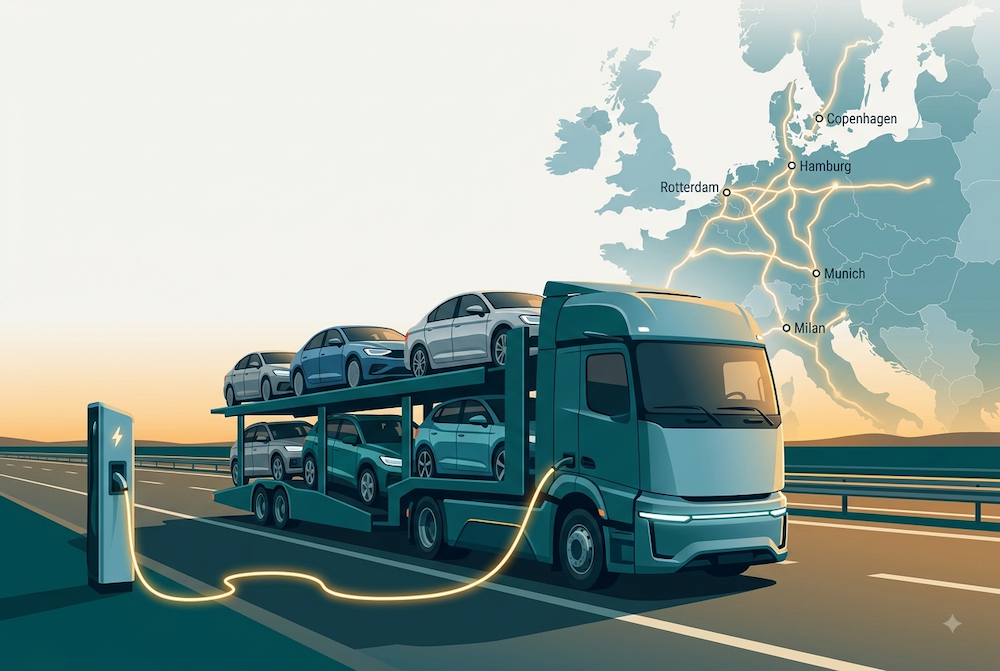
With the introduction of the lorry charge, the Netherlands is aligning with a broader European trend in which freight traffic pays for road use. As a result, foreign hauliers also contribute to the use of Dutch infrastructure. This is one of several forces driving the structural change in 2026 reshaping how car transport is priced and operated.
Conclusion
The essence of the measure is simple: every kilometre counts. But the consequences are far-reaching. Transport companies are judged on efficiency, utilisation and organisational capability. In this new reality, competitive advantage shifts to those who have their logistics under control down to the last detail.