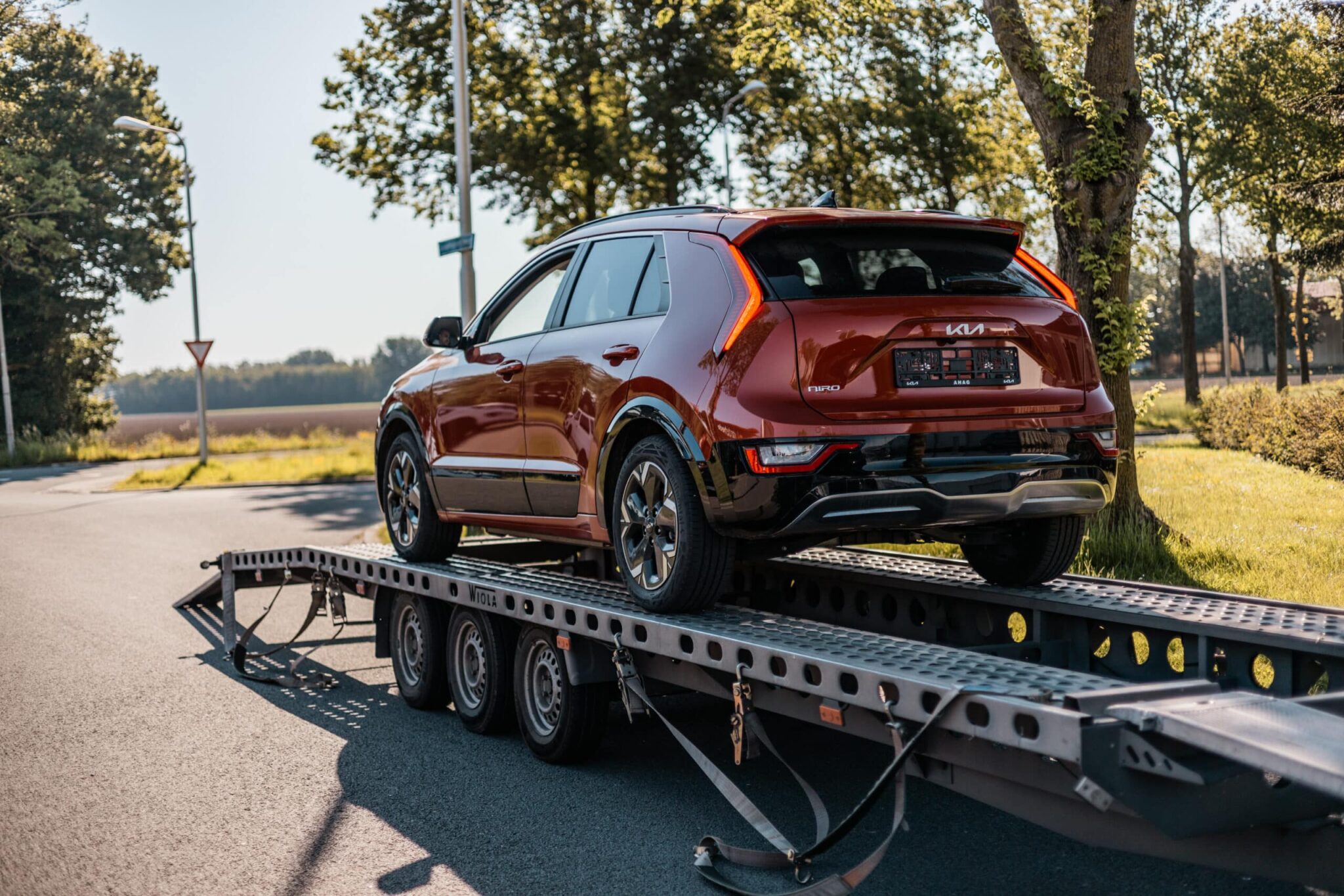
The independent car dealer faces a stubborn dilemma. Time versus money. Not enough vehicles for a full transport, so wait until the volume is there, or pay a higher price for a half-empty trailer on a separate transport order. Both options are unfavourable. Spotfilling resolves it, without compromising on quality, speed or budget.
Spotfilling, briefly
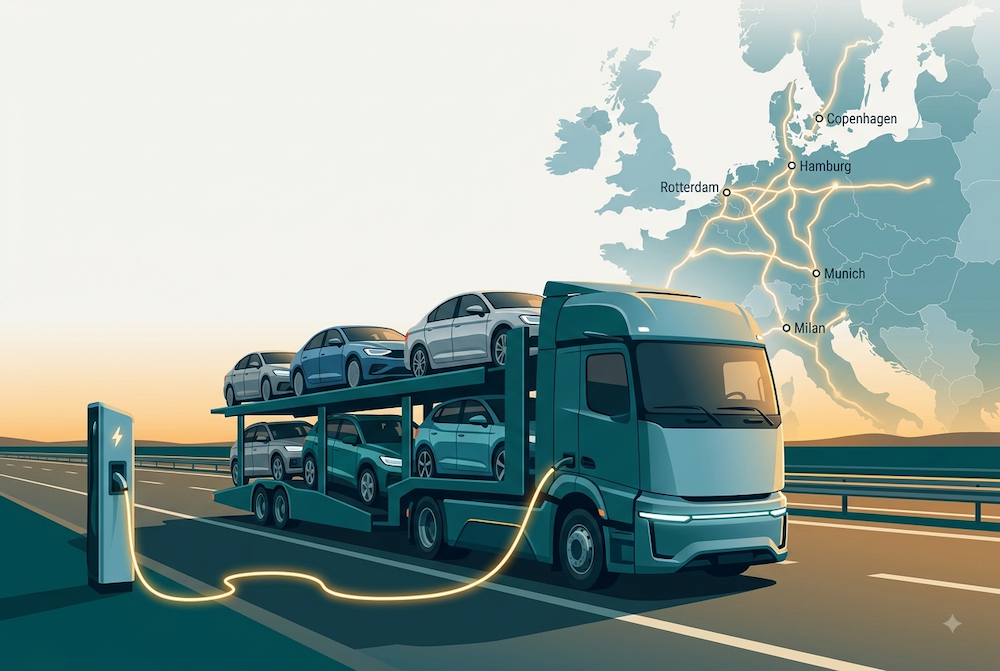
Spotfilling means that one or more vehicles ride along on the spare capacity of a carrier already heading in the right direction. A platform matches your order to the right trip, in real time, and handles the booking through to delivery. For more background, see the pages on car transport for car dealers and car transport.
No minimum volume, even for one car
A misconception among smaller dealers: car transport only works at high volume. The reverse is the case. Car transport via spotfilling removes scale as a barrier.
In the past, you had to gather four or more vehicles before a trip made financial sense. Now, a single vehicle is enough to ride along on transport that is running anyway. For you, that means a vehicle you've bought can be picked up the same week, without waiting for other orders in the same region. The steps involved are set out in how it works.
20% lower transport costs, and what that means in practice
On a €350 trip, a 20% cost reduction is a €70 difference per vehicle. Multiplied across 100 cars a year, that is €7,000 dropping straight into your margin.
The 20% comes from our work with CarOnSale, measured at scale across thousands of trips in 2025 and 2026. The underlying mechanism is the same for one vehicle as for a hundred: by bundling capacity, the cost per vehicle falls. For more on how a transport price is built up, read transport costs per route.
Rising tolls on European roads reinforce the case for bundling capacity. On a dedicated trip from Zwolle to Munich, the full toll is charged against a single vehicle. With spotfilling, the same toll is spread across multiple vehicles and multiple clients. For what that looks like in numbers, read what 500 km of toll road actually costs.
Delivered sooner is sold sooner
The average pickup time on the TransConnect platform within Europe is 4.4 working days. That is roughly half the time required by traditional transport. Conventional planning often spends several days on load build-up and back-and-forth coordination.
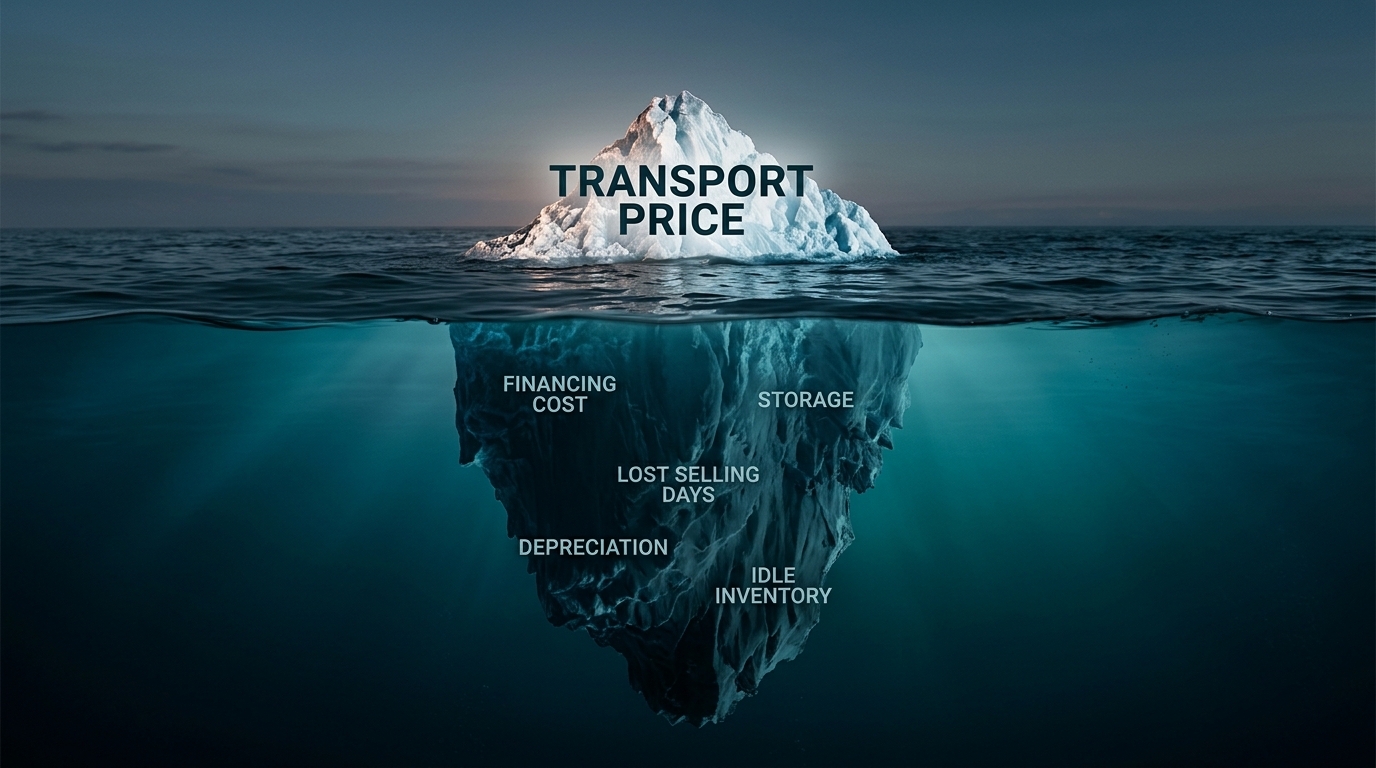
For a dealer, every day a vehicle isn't on the lot is a loss. Days on lot cuts both ways: as long as a car isn't ready to sell, it can't be sold. The article on the invisible bottleneck in remarketing goes deeper into how transport speed shapes lead time across the chain.
A road-user charge makes one-off trips dearer, not cheaper
From 1 July 2026, carriers in the Netherlands will pay €0.191 per kilometre for N2 and N3 vehicles. Empty kilometres will appear as a visible cost item on the toll invoice from that date.
That affects you indirectly. A carrier running half-empty on an unbundled trip for a small number of vehicles will no longer be able to bury the toll inside the margin. The price per vehicle rises. Spotfilling works the other way around: the toll is spread across every vehicle on the same trip. For background on the new regime, see the road-user charge from July 2026.
A wider buying radius, without a higher transport threshold
Many independent dealers buy locally. Not because the supply is better, but because international transport feels too expensive or too complex. Spotfilling removes that threshold.
A car in Hamburg, Lyon or Aarhus is, with spotfilling, just as accessible as a car two provinces away. The price reflects market conditions, not a complicated trip. Your buying radius widens, and with it the supply you can choose from and the margins you can negotiate.
Driving it yourself costs more than it looks
Picking up a car yourself feels like the cheapest option. No transport costs, just fuel. The real costs are usually higher than they look.
Add it up: extra kilometres on your own vehicle, wear, fuel, travel time, damage risk on the road, and — easily forgotten — a day when you are not at the business and not selling. A round trip from Zwolle to Munich is a full working day. Professional transport via spotfilling regularly comes out cheaper on that calculation, and is always more predictable.
No fleet of your own, no legal complexity
Cabotage rules, country-specific driving bans, load securing under VDI 2700: these are matters for carriers, not for you. On a car transport platform, they are already handled with the carriers in the network.
The same applies to certification. ISO 9001, 14001 and 27001 are standard at platform level, even for single-vehicle orders. You don't have to organise your own audits or vet suppliers individually.
On top of that, the structural driver shortage in Europe — around 500,000 vacancies — hits smaller shippers hardest. A platform aggregates scarce capacity that an individual dealer would never be able to attract on their own.
More sustainable car transport
Fewer empty kilometres means lower CO₂ emissions per vehicle moved. That is no longer a side benefit. For dealers working with leasing companies or larger buyers, Scope 3 reporting is becoming a standard part of the relationship.
Spotfilling delivers the underlying data automatically, per trip and per vehicle. For how it is captured, see the page on sustainability in car transport.
Closing thought
Spotfilling works not despite running without a fixed volume, but because of it. Lower cost per vehicle, shorter lead times and access to routes that would never be viable with a fleet of your own.
Want to know what a trip would cost you? Calculate a transport price directly, or sign up for free.