Most cars arrive exactly as they left. Still, it happens: a scratch that wasn't there at loading, a dent in the bumper, a warning light that comes on. Damage during car transport is rare. But when it does happen, one thing matters most: how you handle it. And that goes wrong more often than the damage itself.
Because most claims aren't rejected because the damage isn't real. They're rejected because the evidence is missing. No photos, nothing on the consignment note, reported too late. Good documentation isn't one party's job. The transport partner records the vehicle's condition at pickup and delivery; the customer checks it on receipt. Whether you book transport or carry it out, a complete file protects you both. This blog explains how to document, report and follow up on transport damage correctly, so that a valid claim is actually paid.
How often does something go wrong?
Honestly: almost never. We actually establish damage on fewer than half a percent of all transport orders. The vast majority of cars arrive exactly as they left. But for the car that is affected, that percentage isn't relevant. Then you want to know what to do. So this blog isn't about how exceptional damage is. It's about how to handle it well when it happens.
The damage we see most often
Not all damage is the same, and not all damage is equally easy to establish.
Cosmetic and bodywork damage
By far the most reports concern the exterior. Scratches, dents, damage to the bumper or the wheels, and other visible defects to the bodywork. This type of damage is easy to photograph, and therefore easy to support, provided you record it at the right moment.
Mechanical damage
Mechanical complaints occur less often, but they are harder to handle. Think of a warning light after delivery, a flat or weak battery, or an alleged transport-related defect. With reports like these, it's harder to show that the transport was the cause. That's exactly why the condition at pickup is so important: anything recorded beforehand, you don't have to prove afterwards.
Where transport damage usually occurs
Damage rarely happens on the motorway. Most reports trace back to a handful of moments:
- during loading or unloading of the vehicle;
- through external factors during transport;
- pre-existing damage that wasn't properly recorded before departure;
- damage discovered only after delivery, where it can no longer be established when and where it occurred;
- miscommunication about the condition of the vehicle at handover.
The common thread: it almost always comes down to documentation and timing. If the condition at pickup and delivery was properly recorded, the cause is usually clear quickly. If that record is missing, the discussion begins.
What to do at pickup and delivery
The handover moments decide everything. A claim is won or lost at pickup and at delivery. Most of the work sits with the transport partner who loads, carries and unloads; the party receiving the vehicle checks it. Four steps.
Record the condition at pickup
For the transport partner, it starts at loading. Record the condition of the vehicle before departure, with clear photos. Pre-existing damage recorded here can't later be wrongly attributed to the transport. That protects the transport partner just as much as the customer.
Inspect before signing
Walk around the car before the consignment note is signed. Signing means agreeing with the condition as it is at that moment. If you spot something, don't sign without a note.
Record the damage on the CMR and with photos
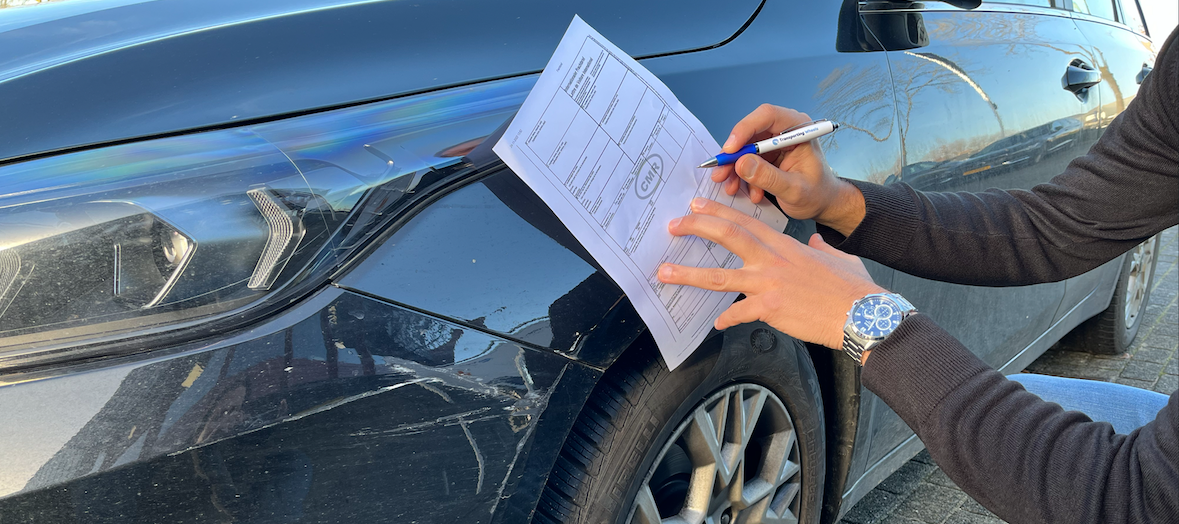
Note any visible damage on the CMR consignment note at the moment of delivery. Take clear photos of the damage as well. If the damage isn't on the CMR, we can't process the claim, and the partner will reject it too. If you work with the digital eCMR, you record the note and the photos digitally, right at handover.
A concrete example. If you see a scratch on the bumper, photograph it before you sign and note it on the CMR. Not by email the next morning. That difference decides whether the damage can be shown to have occurred during transport.
Report within two working days
Report the damage within two working days of delivery, with the signed CMR and the photos. You do this easily through your portal. After this deadline, reporting is no longer possible. The sooner you report, the easier it is to establish the cause.
Why claims get rejected
Almost every rejection comes back to a procedure that wasn't followed. The most common reasons:
- no photos at loading or unloading;
- damage not noted on the CMR at delivery;
- reported too late;
- insufficient supporting evidence;
- disagreement about where and when the damage occurred;
- matters involving third parties where transport partners or insurers do not accept liability.
That last point is the hardest. When several parties are involved, it can be difficult to establish responsibility and reach a timely resolution. Here too, good documentation helps: the clearer the evidence, the sooner the right party is identified.
How we keep the process fair
We don't assess claims on gut feeling. We work with fixed procedures so that every report is handled the same way: clear procedures for pickup and delivery, mandatory vehicle photos, a fixed reporting protocol, and ongoing contact with transport partners and customers. We use recurring situations to sharpen the process further.
The goal isn't to take one party's side. It's to decide on the facts, and on whether the agreed procedure was followed correctly. For everyone in the chain, that means predictability. Whether you book a transport or carry it out, follow the steps and the claim is handled on evidence rather than on debate. For the transport partner, good work at pickup and delivery pays off: a complete file prevents unjustified claims. We help both parties handle the damage report from start to finish.
Frequently asked questions
How quickly do I have to report damage?
Within two working days of delivery, with the signed CMR and photos of the damage. After that deadline, we can no longer process the claim.
What if the damage isn't on the CMR?
Then we can't process the claim, and our partner will reject it. The note on the CMR is the evidence that the damage was present at delivery. So always note visible damage before you sign.
Who is liable for damage during transport?
TransConnect acts as a digital platform and arranges transport through certified partners. In the event of damage, we help handle the report and, based on the documentation and the procedure followed, determine which party is responsible.
What does CarSecure cover?
CarSecure is our damage cover, not insurance. The cover compensates damage up to €70,000 per vehicle, up to a maximum of three vehicles per transport. The own risk is €500 per claim. CarSecure covers damage from all causes; the only exception is war. The condition remains that you report within two working days, with a signed CMR and photos.
What if I only discover the damage after a few days?
Report it as soon as possible, but keep in mind that damage reported outside the two-working-day deadline, or not noted on the CMR, is difficult or impossible to support. So always inspect a car thoroughly at delivery, before you sign.
How we arrange this for you
On every transport, we record the condition of the vehicle at pickup and at delivery. So you never have to rely on your word, and in the event of a claim you have the evidence in hand straight away. Want to arrange a transport? See how it works. Do you carry transports yourself? Read how it works for transport partners. For how our damage cover works, read CarSecure in our FAQ.