We get it: new EU regulation can sound like background noise. Not this time. On 18 June 2026, the European Parliament gave final approval to the new ELV regulation: 437 votes in favour, 112 against, 20 abstentions. This is no longer something on the horizon. It's a fixed fact you plan around now.
What changes for you as a dealer, fleet owner or importer? Here's the breakdown.
What is the ELV regulation, and why now?
ELV stands for End-of-Life Vehicles: vehicles that reach the end of their working life. The new regulation replaces the ELV directive from 2000. That difference matters. A directive first needs to be transposed into national law. A regulation applies directly and equally across all EU member states, with no extra step.
The old directive dated from a different era. It focused mainly on passenger cars and left member states room for their own interpretation. That created differences between countries, and gaps in enforcement. Every year, 6.5 million vehicles in the EU reach the end of their working life. Not all of them ended up with an authorised treatment facility. The new regulation is meant to close that gap.
What's changing: the five key points
1. Export ban on non-roadworthy vehicles, more strictly enforced. Non-roadworthy vehicles can no longer be freely exported outside the EU. This provision applies five years after the regulation enters into force.
2. Digital vehicle passport. Every vehicle gets a digital record with information on the materials used and its level of circularity. That makes recycling and reuse easier to trace.
3. Phased targets for recycled plastic. Manufacturers must use 15% recycled plastic per vehicle type within six years, rising to 25% within ten years. At least 20% of that must come from end-of-life vehicles or used parts: a closed loop.
4. Broader scope. Alongside passenger cars, motorcycles and heavy commercial vehicles will also fall under the regulation. Rollout is phased, with passenger cars and light commercial vehicles covered first.
5. Certified parts no longer classed as waste. Reusable parts that meet the requirements are treated as a product, not as waste. That makes reuse simpler.
Manufacturers also get extended producer responsibility within three years: they help cover the cost of collecting and treating ELVs, across the whole EU.
What does this mean for you as a car dealer?
The biggest direct impact sits in export documentation. If you sell a used vehicle commercially, you need to be able to show it isn't an ELV. That can be a valid roadworthiness certificate, or an assessment confirming the vehicle is still roadworthy.
This mostly affects the day-to-day handling of low-value trade-ins that you dispose of or resell into other markets. For cross-border transport, that documentation needs to be correct and travel with the vehicle. If you work with authorised ATF partners (treatment facilities for end-of-life vehicles), little changes for you in practice. If you still rely on informal arrangements, now's the time to formalise them.
What does this mean for you as a fleet owner?
For fleet owners, the impact sits further upstream: at procurement. The digital vehicle passport and the recycled-content targets feed into ESG reporting and into your fleet's residual value. Building circular procurement criteria into your process now puts you ahead for your next fleet renewal.
In the short term, disposal costs may rise slightly, as treatment becomes more strictly regulated. In the longer term, a more predictable European framework works in your favour: fewer differences between member states, fewer surprises.
What changes in vehicle transport?
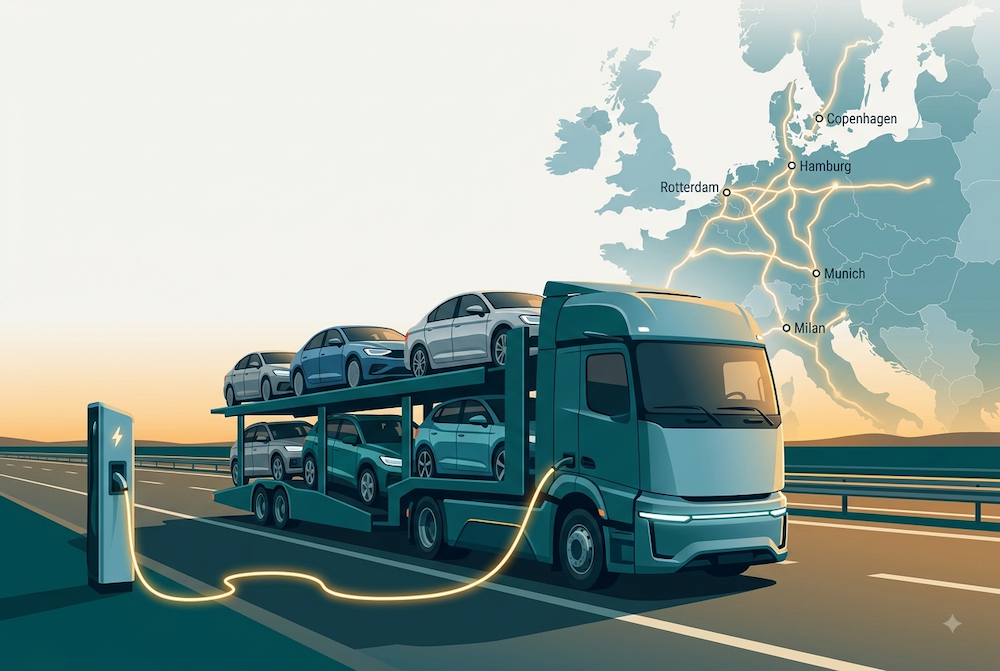
This is where our role begins. Cross-border transport of used and end-of-life vehicles needs a documentation flow that holds up: from roadworthiness certificate to export papers. We make sure those documents travel with the vehicle, at every handover in the chain.
For vehicles that do reach the end of their working life, a new form of reverse logistics emerges: from owner to authorised treatment facility, traceable and compliant. That's not an extra layer on top of your transport. It's part of how we already organise car transport across Europe, under whatever rules apply at the time.
When does this take effect, and what can you do now?
The framework is set. The rollout follows in phases.
| Step | Timeline |
| EP approval | 18 June 2026 (complete) |
| Formal approval by the Council | Follows the EP vote |
| Entry into force | After publication in the EU Official Journal |
| Regulation applies | 24 months after entry into force |
| Extended producer responsibility | 3 years after entry into force |
| Export ban on non-roadworthy vehicles | 5 years after entry into force |
| Recycled-content target, phase 1 (15%) | 6 years after entry into force |
| Recycled-content target, phase 2 (25%) | 10 years after entry into force |
You don't need to overhaul everything tomorrow. What you can do now: get your export documentation in order, check your ATF relationships, and, if you're a fleet owner, start factoring circular criteria into your next procurement round.
Frequently asked questions
What's the difference between a "used vehicle" and an "end-of-life vehicle" under the new ELV regulation?
A used vehicle is still roadworthy and can be traded. An end-of-life vehicle (ELV) has reached the end of its working life and must be processed through an authorised treatment facility. For commercial sales, you need to be able to show which category a vehicle falls into, with a roadworthiness certificate or a formal assessment.
Can I still export used cars outside the EU?
Yes. The export ban applies specifically to non-roadworthy, end-of-life vehicles, and only takes effect five years after the regulation enters into force. You can keep exporting roadworthy used vehicles as normal, provided your documentation is in order.
When exactly does the ELV regulation take effect?
The regulation has been adopted by the European Parliament, but still needs formal approval from the Council. After that, it enters into force following publication in the EU Official Journal, and applies 24 months later. The individual measures, such as the export ban and the recycled-content targets, follow afterwards in phases.
Want to know how we organise compliant cross-border car transport, from documentation to delivery? See how it works.
Source: official press release, European Parliament, 18 June 2026 (ref. 20260611IPR45210); Febelauto.