The used car market keeps growing, but affordability increasingly determines who can buy which car. National average prices don't tell you enough on their own. The gap between income, the price actually paid and financing costs determines the real market. Affordability increasingly determines where demand arises. Stock, financing and logistics together determine whether you can serve that demand quickly and profitably. Whoever masters both sides is ahead of anyone who only looks at average selling prices.
In brief:
- Germany: the most striking finding is how sharply the price picture differs depending on the metric used. An average of €27,787 advertised versus €18,310 actually paid according to buyer research, two figures that aren't directly comparable. For dealers, the lesson is clear: base purchasing and pricing on transaction reality, not only on platform prices. Financing plays a major role here too.
- France: used cars weigh relatively heavily on household budgets. At the same time, the average price of used EVs is already close to the average for the whole used car market. That can create opportunities for affordable used EVs.
- Netherlands: on average, used cars look relatively affordable, but that figure masks large income differences. For lower and middle incomes, an average used car at over €24,000 is far from a given. For commercial segmentation, monthly budget can therefore be more informative than average purchase price alone.
What else stands out across Europe: Poland remains an important outlet for used cars from Western Europe. Denmark imports a striking number of young used EVs and exports plenty of older combustion-engine cars in return. This points to increasingly clear cross-border shifts between vehicle types, age brackets and price segments.
Key commercial takeaway: competitive advantage doesn't simply come from offering a lower price. It comes from better understanding what a specific buyer can afford each month, sourcing the right stock accordingly, offering transparent financing, and getting that car to the right market quickly.
Why a national average answers the wrong question
In the Netherlands, the used car market grew 3.7% in 2025; Germany and France posted much more modest growth, at 0.5% and 0.9% respectively. So the market is growing, but an average price doesn't tell you who actually buys that car, or at what price. Germany shows this most clearly: the average advertised amount there is considerably higher than what buyer research records as the price actually paid, even though the two sources don't measure exactly the same cars or sales channels. Whoever steers by the wrong average prices themselves out of the market or leaves margin on the table, most clearly in Germany, but just as much in France and the Netherlands.
Germany: the gap between asking price and price paid
Germany shows most clearly how sharply the picture changes depending on the price metric used. AutoScout24 recorded an average advertised price of €27,787 for 2025, while German used car buyers, according to the DAT Report, paid an average of €18,310 for their car that same year. Those figures aren't directly comparable: AutoScout24 measures supply on the platform, while DAT surveys buyers on what they actually purchased, with a different mix by age, make and sales channel. For dealers, that's exactly what matters: looking only at platform prices doesn't give a complete picture of the price level at which transactions actually take place.
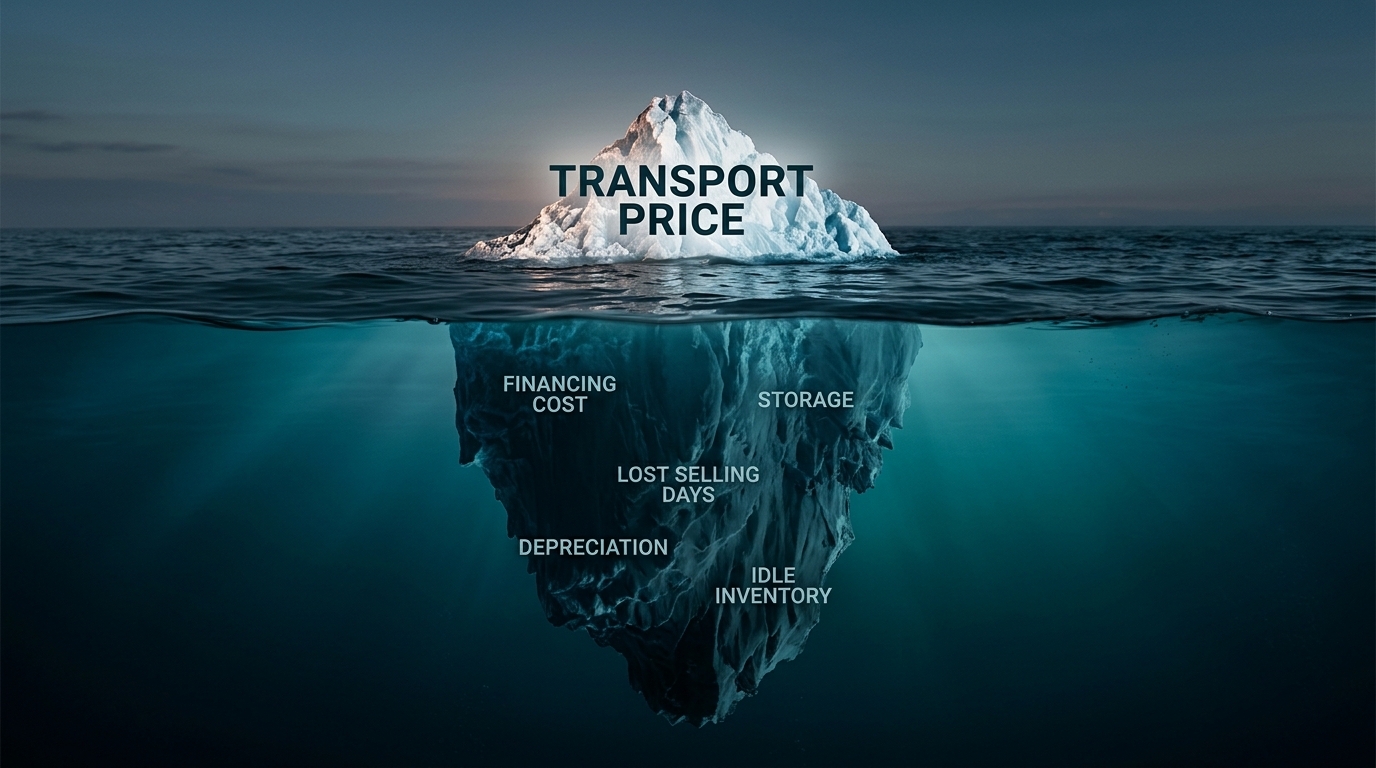
Financing makes that gap more relevant, not less. 49% of German used car purchases are now financed in whole or in part. 44% of German car owners fear they'll no longer be able to afford their car over time. The lesson for dealers is concrete: base purchasing and pricing on transaction reality, not only on platform prices. Whoever aligns stock and pricing with the level at which cars are actually bought builds trust that competitors still clinging to the average advertised price don't.
France: heavy on the household budget, light on electric
Based on the French net median income of around €2,093 a month, the average used car costs 9.6 months' salary. That's more than in the Netherlands, and more than what the average German actually pays. Used cars therefore weigh relatively heavily on French household budgets. At the same time, La Centrale recorded an average price of around €20,955 for used EVs, barely higher than the €19,999 average used car price for the fourth quarter of 2025.
Those two facts together create an opportunity. Where an ordinary used car is already expensive for the French buyer, the average price of a used EV is barely higher than the average for the whole used car market. That can create opportunities for dealers who position themselves early on affordable used EVs, precisely because that price gap, compared with Germany for instance, is still small. Once other players notice, the margin will narrow fast.
Netherlands: an average that hides the real differences
On paper, the Netherlands looks favourable. With an OECD average net salary of around €4,150 a month, the average used car (€24,334, AutoScout24) costs just 5.9 months' salary. On this income measure, the Netherlands looks relatively favourable compared with the other countries studied; the comparison does, however, use a slightly different income definition per country (national net median versus OECD average), so the ranking is indicative rather than an exact measurement. That average also masks large income differences within the Netherlands itself. As an illustration: someone earning €2,000 net a month who sets aside 10% of that saves €12,000 over five years. That's not even half the average AutoScout24 asking price of €24,334. For lower and middle incomes, then, a used car at over €24,000 is far from a given, even though the national figure looks favourable.
For commercial segmentation, monthly budget can therefore be more informative than average purchase price alone. Dealers who sort stock, warranty terms and financing products by what a customer can genuinely spare each month capture part of the demand that otherwise falls through the cracks.
Cross-border shifts: Poland and Denmark show where this leads
Poland remains an important outlet market for used cars from Western Europe. In 2025, 857,600 imported used cars were registered there, 2.8% fewer than a year earlier. Denmark tells a different story. In 2025 it imported no fewer than 78,100 used fully electric cars, with an average age of just 2.4 years. At the same time, outflow consists mainly of older petrol and diesel cars. Of the applications for export tax refunds, 60% concerned diesel cars and 34% petrol cars.
This development shows that the European used car market is shifting across national borders more and more. The number of cars varies by country, and so do the vehicle type, age and price segment. Some countries mainly attract young used EVs, while older combustion-engine cars are exported.
The used car market remains dominant elsewhere too. In Belgium, 734,165 used cars were registered in 2025, accounting for 63.9% of the total passenger car market. Spain, meanwhile, shows how quickly price trends can reverse. Where the main report still noted rising prices for older Spanish used cars in 2025, more recent figures from GANVAM-DAT show that cars aged ten years and older actually became around 4% cheaper in the first half of 2026.
Competitive advantage isn't about being cheaper, it's about fitting better
The figures above all point the same way. Competitive advantage doesn't simply come from offering a lower price. It comes from better understanding what a specific buyer can afford each month, sourcing the right stock accordingly, offering transparent financing, and getting that car to the right market quickly.
A worked example shows what that looks like, for that same German used car at €27,787, based on a representative German car loan rate of 5.39% APR (Santander/Openbank). With a 20% down payment (€5,557) and a 48-month term, you finance €22,230. The monthly instalment then comes to €515, with €2,470 in financing costs (interest plus any product fees) on top of the amount borrowed.
Choose a 10% down payment (€2,779) and a 60-month term instead, and you finance a higher principal of €25,008. The monthly instalment drops to €475, but financing costs rise to €3,488. These are two calculation scenarios on the same car, not the same loan: a lower down payment and a longer term reduce the monthly cost but increase what you pay in total interest and fees.
Affordability determines demand. Stock, financing and logistics determine whether you serve it
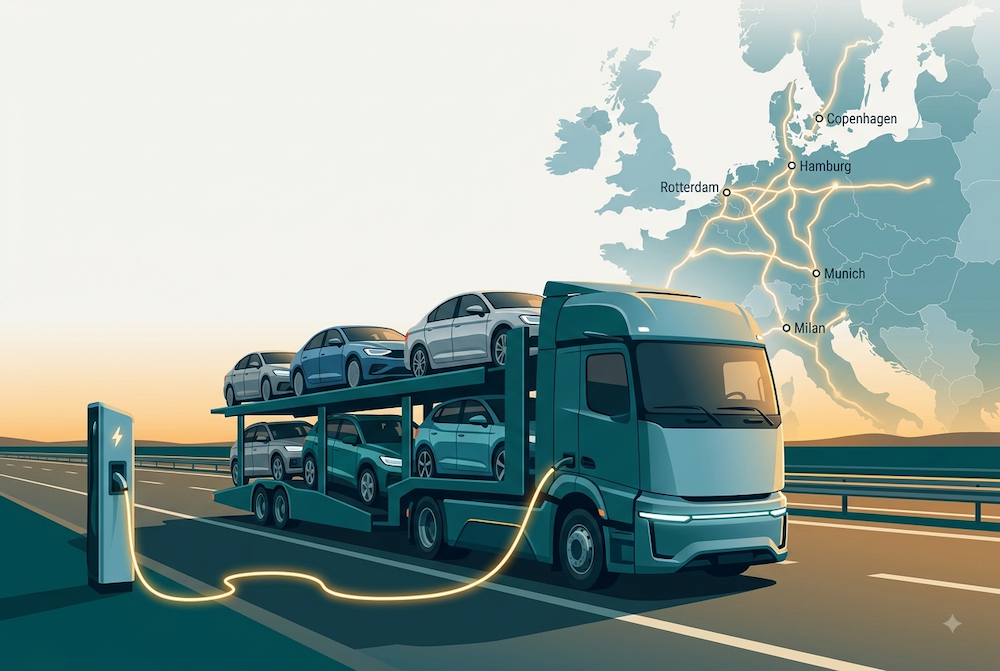
Back to the core point: affordability increasingly determines where demand arises. Stock, financing and logistics together determine whether you can serve that demand quickly and profitably. The dealer who knows that advertised price and price actually paid diverge in Germany, or that large differences in available car budget lie behind the Dutch average, already has the first half of that story. The second half is about how you actually serve that demand: with stock that matches what the buyer can afford, financing that makes that gap transparent, and the speed to get the car to the right place on time.
Frequently asked questions
Are used cars in the Netherlands, Germany and France getting more expensive?
Not everywhere, and not in the same way. In Germany, the ratio between price and income has worsened by 13.4% since 2019, though some recovery has set in since 2023. For France and the Netherlands, that comparison with 2019 is methodologically harder to make because the price sources used have changed in the meantime. What is clear is that price pressure on new EVs is feeding through into the used car market, which also affects the supply of used electric cars.
What's the difference between the advertised price and the price paid?
The advertised price is what's asked on a platform like AutoScout24. The price paid is what buyers actually hand over, according to independent research such as the German DAT buyer survey. Those two figures can diverge sharply, as the German market shows, even though they don't measure exactly the same cars or sales channels.
Why is fitting better a stronger strategy than being cheaper?
Cheaper is a price you can cut today and will have to defend again tomorrow. Fitting better means stock and financing matched to what a specific buyer can afford each month. That builds trust that doesn't get competed away overnight. Dealer margins are already under pressure from cheaper new cars, and transparent financing is one of the few levers you can pull yourself as a dealer.
Sources: DAT Report 2026, AutoScout24 European annual analysis 2025, La Centrale price observatory Q4 2025, INSEE (France, 2024), Destatis (Germany, 2025), BOVAG/RDC, TRAXIO, OECD Taxing Wages 2026, ACEA "Vehicles on European roads 2026", AutoUncle and Danmarks Statistik (Denmark), GANVAM-DAT (Spain, H1 2026).