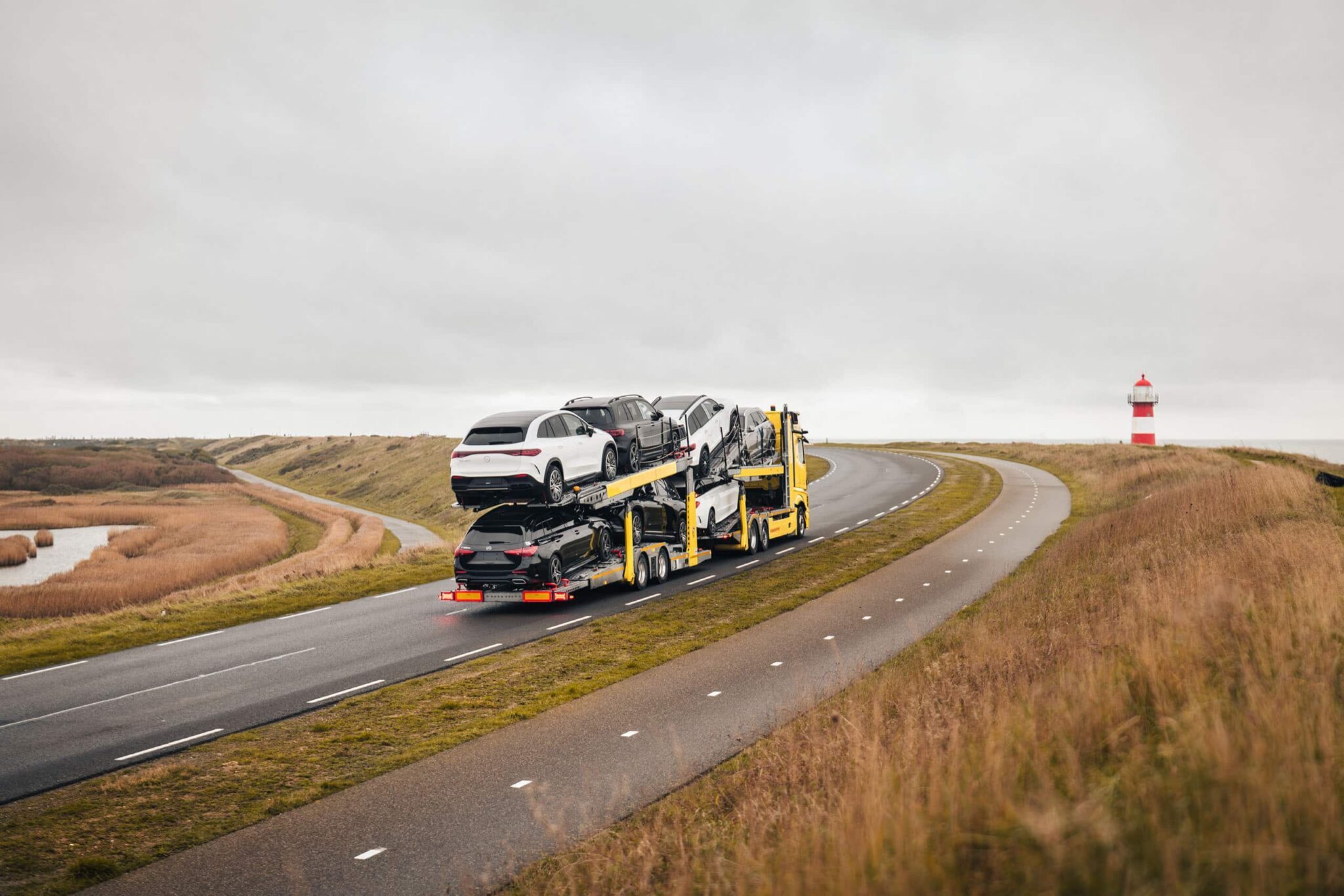
On June 11, professionals, entrepreneurs, leasing companies, industry associations, and other players from the automotive sector gathered at the 2026 National Automotive Congress. During this automotive conference, Rico Luman, Senior Sector Economist for Automotive and Transport at ING Netherlands, provided a sharp analysis of the state of the Dutch automotive market. TransConnect is a sponsor of this event and followed the presented market developments with great interest.
The message from the presentation was clear: the Dutch automotive market is not shrinking, but it is undergoing fundamental changes. The total vehicle fleet continues to grow, used cars remain popular, new car sales remain relatively low, and electrification is continuing, particularly in the business market.
For TransConnect and its customers, these are important signals. Because as the automotive market shifts, so does the need for professional, reliable, and flexible car transport.
A larger vehicle fleet in the national automotive sector, but less renewal
The Dutch vehicle fleet continues to grow. On June 11, the agenda of the National Automotive Congress 2026 will provide the framework to interpret these developments: it is expected that approximately 9.4 million passenger cars will be on the road in the Netherlands by 2026. At the same time, new car sales are lagging behind pre-pandemic levels. The market for new passenger cars appears to be stabilizing in 2026 at a lower volume than in 2019.
This means that while the Netherlands has more cars, those cars are getting older on average. The share of cars older than 15 years is increasing, while the share of newer cars is decreasing. The annual renewal rate of the vehicle fleet remains low.
For the automotive industry, this means that revenue growth will not automatically come from new sales volumes. Growth will more often come from higher prices, maintenance, used cars, and ancillary services. ING expects revenue growth again by 2026. That is precisely why insight into the future of the market is important for companies that want to adapt in a timely manner.
Used cars remain the driving force of the market
The used car market remains strong. For many private buyers, used cars are the most logical choice, especially now that new cars remain expensive for many households. According to the data presented, the vast majority of used car purchases are made by private individuals.
This creates a tension: demand for used cars remains high, but suitable supply is not always available. Because fewer new cars have been sold in recent years, fewer young used cars are also becoming available. The market for new passenger cars appears to be stabilizing at a lower volume than in 2019. For 2026, the forecast is for around 380,000 new passenger car registrations. Imports are therefore playing an increasingly important role in ensuring sufficient supply for the Dutch market.
For commercial vehicle transport, this means that logistics movements involving used cars are becoming more important. This includes transport between dealers, dealerships, auctions, remarketing locations, import channels, partner networks, and end customers. At the same time, shifts in supply, margins, and parts are also affecting repair shops, customer expectations, and revenue models, forcing companies to more clearly define their position in the automotive industry. Revenue in the automotive industry is expected to rise by over 3%, despite lower volumes of new cars, which calls for agile decisions regarding inventory, services, and logistics, particularly for the future.
Electrification is accelerating, but unevenly
Electric cars are growing particularly strongly in the business and lease market. New lease inflows are already largely electric. At the same time, the electrification of the total vehicle fleet is proceeding more slowly, as the overall replacement of cars remains limited.
Interest in electric cars is also growing in the used car market. While the price of a used EV fell sharply last year, it is rising this year due to extra demand and a still limited supply of suitable vehicles. This makes electric vehicles increasingly important in the logistics process, while changes in the parts market further increase the pressure on planning and availability in the supply chain.
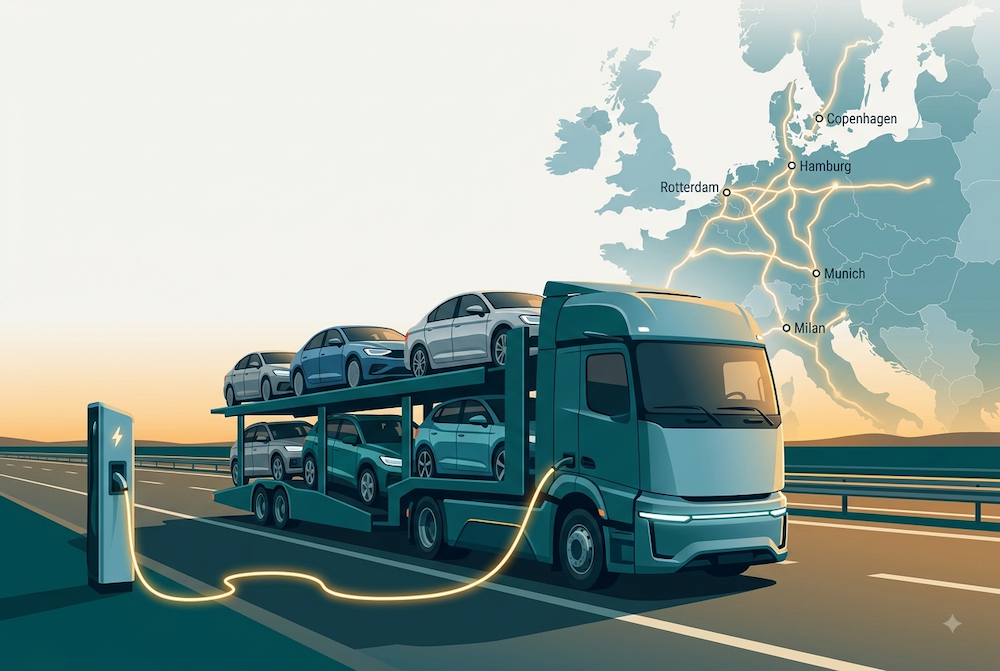
For vehicle transport, this brings new considerations. Electric vehicles require careful planning, knowledge of charging status, safe handling, and sometimes different process agreements regarding storage, inspection, and delivery. This also touches on broader developments in mobility. As the number of EVs in transport flows grows, specialized experience with electric vehicle fleet transport is becoming increasingly valuable.
The business market remains a key driver for the automotive sector
A striking point from the market data is that new cars in the Netherlands are strongly business-driven. A large portion of new registrations stems from business drivers, lease arrangements, and fleet policies. Private individuals are more likely to opt for used vehicles. This is precisely why themes such as mobility, electrification, digitalization, and internationalization are important for companies that want to remain relevant and successful.
This means that shifts in the business market have a direct impact on transport volumes. Changes in lease contracts, end-of-contract flows, vehicle redeployment, fleet renewal, and remarketing are becoming more important than ever. For leasing companies, this requires control over planning, lead times, vehicle status, and reliable handoffs between different links in the chain.
TransConnect has a clear role to play here: business customers need predictable, scalable, and transparent transport solutions. Not only for new vehicles, but especially for used vehicles, ex-lease cars, imported cars, and electric vehicles. This makes electric vehicles increasingly important in the logistics process. Technological innovations are following one another at a rapid pace in this sector. In practice, this calls for different process agreements regarding storage, inspection, and delivery, while smarter cars are changing customer expectations and the role of data and software in the automotive sector is growing.
Imports and international flows are increasing
The Dutch market is becoming more dependent on imports to meet the demand for used cars. At the same time, the influence of international brands, including Chinese manufacturers, is growing, particularly in the electric vehicle segment.
This is leading to more international vehicle flows and more complex logistics chains. Cars are increasingly coming from different countries, via different trade channels, and with different delivery requirements. For businesses, this makes it more important to maintain control over transportation, lead times, status information, and damage-free delivery.
Car transport is thus becoming less of a final step in the sales process and more of a strategic component of the supply chain.
What does this mean in concrete terms for commercial car transport at the automotive congress?
The developments Rico Luman outlined during the 2026 National Automotive Congress point to a number of clear implications. In addition to the influence of international brands, international players are entering the automotive market at an ever-increasing pace, and at the NAC, participants can meet companies such as the BMW Group and Toyota to establish new contacts:
1. Increased demand for flexible used-car transport
As used cars become more important, the need for transport between trading locations, dealers, auctions, refurbishers, and end users is also growing.
2. More import-related transport movements
Rising imports of used vehicles require reliable logistics from border locations, ports, hubs, and foreign partners.
3. Greater role for remarketing and ex-lease processes
Commercial vehicles are increasingly being given a second or third life. This requires efficient transportation for collection, inspection, repair, storage, sale, and delivery.
4. EV transport is becoming a specialty
Electric vehicles require extra attention to charge levels, planning, handling, and delivery conditions. This is becoming increasingly important as the share of EVs grows.
5. Transport capacity must be flexible
The market is becoming more volatile due to tax regulations, price trends, import flows, and shifting demand. Business customers therefore need transport partners who can quickly scale up or adjust.
6. Data and supply chain visibility are becoming more important
In a business where vehicles change owners, locations, and intended uses more frequently, reliable data is becoming increasingly valuable. Insight into status, location, scheduling, and delivery times helps entrepreneurs and automotive professionals respond more quickly and make better decisions.
.jpg?width=1200&height=750&name=NAC_2026%20(1).jpg)
Our perspective on developments in the automotive market
As a sponsor of NAC 2026, TransConnect views the outlined developments as confirmation of the growing strategic role of commercial vehicle transport.
The Dutch automotive industry is not shrinking, but shifting. From new to used. From private new to commercial and lease. From fuel to electric. From domestic stock to international supply. And from simple delivery logistics to supply chain management.
For TransConnect, this confirms just how important professional car transport is within a changing market. Reliability, flexibility, insight, and careful handling are becoming increasingly critical to success. It is precisely in this shift that opportunities arise for entrepreneurs, leasing companies, dealers, importers, industry associations, and other parties who want to organize their networks and logistics processes more intelligently and establish new business contacts.
Those who want to maintain control over vehicle flows should not wait until the end of the process to organize transport. Especially in a market characterized by scarcity, price pressure, and changing customer expectations, transport becomes a strategic link that can inspire, partly through sessions on international trends and technological innovations. Those who let this momentum slip by may miss out on valuable insights and opportunities.
The automotive market is changing. Commercial vehicle transport is changing with it.
Header photo credits: ProMedia